
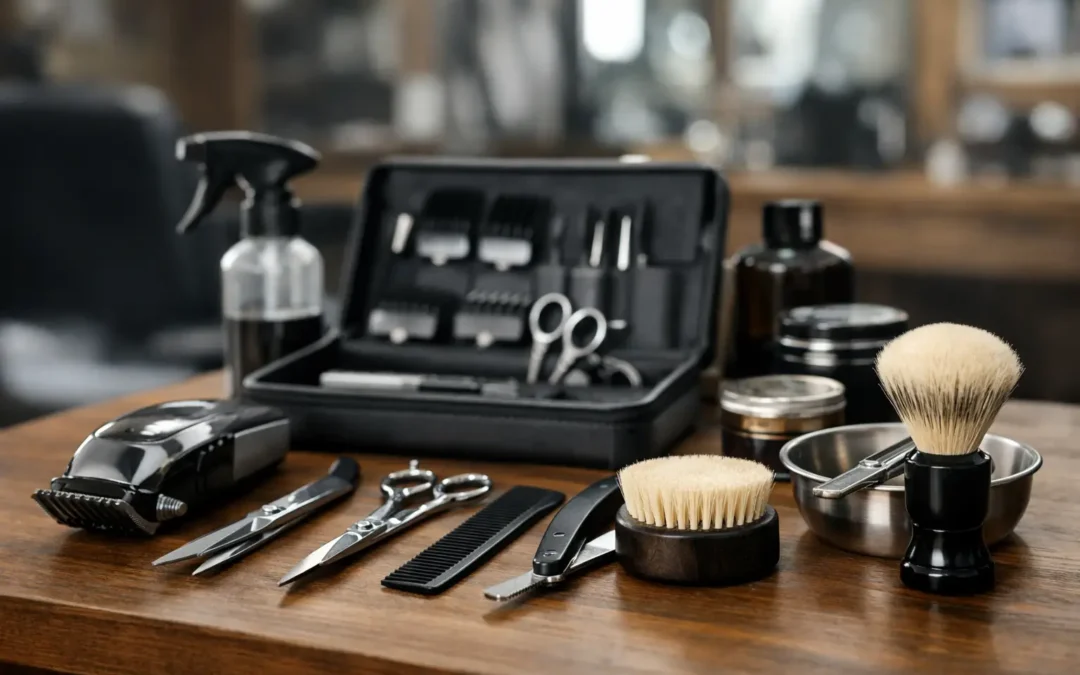
A clean taper can reveal every weak point in a student’s technique. So can an uneven neckline, a snagging comb, or a clipper that loses power halfway through a busy practical session. The best tools for barber students are not simply the most expensive items in a catalog. They are dependable, comfortable to use, easy to maintain, and suited to the skills you need to build from day one.
A professional barber kit develops alongside your technique. Start with core tools that support cutting, fading, detailing, sanitation, and client comfort. As your confidence grows through hands-on training and work with real clients, you can add specialized equipment based on the services and looks you enjoy most.
The Best Tools for Barber Students Begin With the Core Kit
Your first kit should help you practice the services clients ask for most often: clipper cuts, fades, beard work, scissor-over-comb techniques, and clean finishing details. Buying too many tools too early can stretch your budget without improving your work. Focus first on quality essentials that will hold up through frequent practice.
Clippers: Your everyday workhorse
A reliable clipper is the center of most barber kits. Look for a professional model with enough power to move through different hair textures without pulling. It should feel balanced in your hand, especially because you will use it repeatedly while learning fades, tapers, bulk removal, and blending.
Cordless clippers offer freedom of movement and make it easier to work around a client’s head, but battery life matters. A corded clipper may be less convenient, yet it provides consistent power during long sessions. Many working barbers eventually keep both available. For a student, one dependable clipper with a good range of guards is the right starting point.
Do not choose based on appearance alone. Test the grip, weight, switch placement, and noise level if possible. A clipper that feels awkward can affect your control and cause hand fatigue during a full day of practical work.
Trimmers for clean lines and close detail work
Trimmers are built for precision. They help you create sharp necklines, outline around the ears, clean up beards, and refine small areas that a clipper cannot reach as accurately. A close-cutting trimmer is useful, but it must be handled with care. Pressing too hard or working too quickly can irritate skin.
Students should prioritize control over chasing the closest possible line. Learn how to stretch the skin gently, use the corner of the blade, and check symmetry from more than one angle. A trimmer becomes one of your most valuable tools when your technique is thoughtful and client-focused.
Shears that match your hand and training level
Even barbers who specialize in fades need strong shear skills. Shears are essential for cutting longer tops, refining shapes, removing weight, texturizing, and creating polished transitions. A beginner does not need the most premium pair on the market, but they do need a sharp, professional-quality pair that fits comfortably.
A versatile cutting shear in the 6- to 7-inch range works well for many students, particularly for scissor-over-comb work. The exact size depends on your hand and preferred cutting style. If possible, hold several options before buying. Poor fit can lead to tension in your thumb, wrist, and shoulder.
Texturizing shears can be useful later, but they are not a substitute for sound sectioning and cutting technique. Build your foundation with one reliable cutting shear, then add specialty shears as your training and goals require.
Combs, Brushes, and Small Tools That Improve Control
Great barbering is often decided by details that look simple from the outside. The right comb helps you establish clean partings, lift hair consistently, guide a clipper, and assess your blend. Keep a few professional-grade combs in different sizes rather than relying on one all-purpose option.
A taper comb is especially useful for clipper-over-comb and scissor-over-comb techniques. A wide-tooth comb helps manage thicker or curlier hair, while a fine-tooth cutting comb supports precision and clean sectioning. Choose combs that are heat-resistant, smooth, and sturdy enough for daily use.
A neck duster, spray bottle, sectioning clips, barber brush, and handheld mirror also earn their place in a student kit. They may seem minor, but they support a more organized service and a better client experience. When you can work without searching for tools or interrupting your flow, you gain confidence faster.
Build Sanitation Into Every Service
Professional tools must be clean, disinfected, and stored properly. Sanitation is not an extra step after the haircut. It is part of the haircut. Clients notice whether their barber maintains a clean station, uses fresh neck strips, and handles tools with care.
Keep clipper disinfectant, blade oil, cleaning brushes, disposable neck strips, clean towels, gloves, and a covered tool case in your regular setup. Follow the instructions for each product and your school or local licensing requirements. Clippers and trimmers should be brushed free of hair, disinfected, and lubricated according to the manufacturer’s recommendations.
It is also wise to keep duplicate combs and clips. This allows you to use clean tools throughout the day instead of rushing to sanitize one item between services. Good habits in training become the standards clients will expect when you begin your career.
Add a Shaver and Razor When Your Foundation Is Strong
A foil shaver is a valuable addition for close finishing on the neck, face, and very short styles. It can create a polished look after clipper work, but it works best when you understand skin sensitivity and proper preparation. Not every client wants or needs an extremely close finish, particularly if they are prone to irritation or ingrown hairs.
A straight razor or replaceable-blade razor can also elevate detail services, beard work, and finishing. It requires focused training, strong sanitation practices, and a calm, controlled hand. Never treat razor work as a quick add-on. The service calls for careful consultation, safe blade handling, and respect for the client’s skin.
These tools are worth adding when your program includes the proper instruction and you are ready to practice deliberately. At The Beauty Academy, hands-on learning helps students build the practical judgment behind every service, not just familiarity with the equipment.
Choose Tools for Your Budget, Not for Social Media
It is easy to see a popular barber online using a full set of premium tools and assume you need the same setup immediately. In reality, a focused kit is more useful than a crowded one. You need tools that help you practice consistently, maintain professional standards, and improve your results.
Spend thoughtfully on your clipper, trimmer, shears, and sanitation supplies. Those are the items you will rely on most. Save money by delaying duplicate tools, specialty blades, extra colors, and accessories that do not directly support your current training goals.
Price alone does not define value. A less expensive tool that fits your hand, performs consistently, and is maintained well may serve you better than a costly tool you do not know how to use. Ask instructors why they recommend certain tools, how to care for them, and when an upgrade truly makes sense.
Keep Your Kit Organized and Ready for Practice
A barber’s professionalism shows before the first cut begins. Use a case or station organizer with separate areas for clean tools, disinfected tools, cords, guards, and sanitation products. Label your guards and check that your equipment is charged before each practical session.
Create a simple maintenance routine at the end of every day. Remove hair from your tools, disinfect surfaces, oil blades when needed, inspect guards for cracks, and recharge cordless equipment. This protects your investment and prevents small problems from becoming service interruptions.
Your tools should support your growth, not distract from it. Choose a practical foundation, learn each item thoroughly, and let your skill be the reason clients remember the finished cut. With the right kit and consistent hands-on practice, you can step into every service prepared to succeed.