
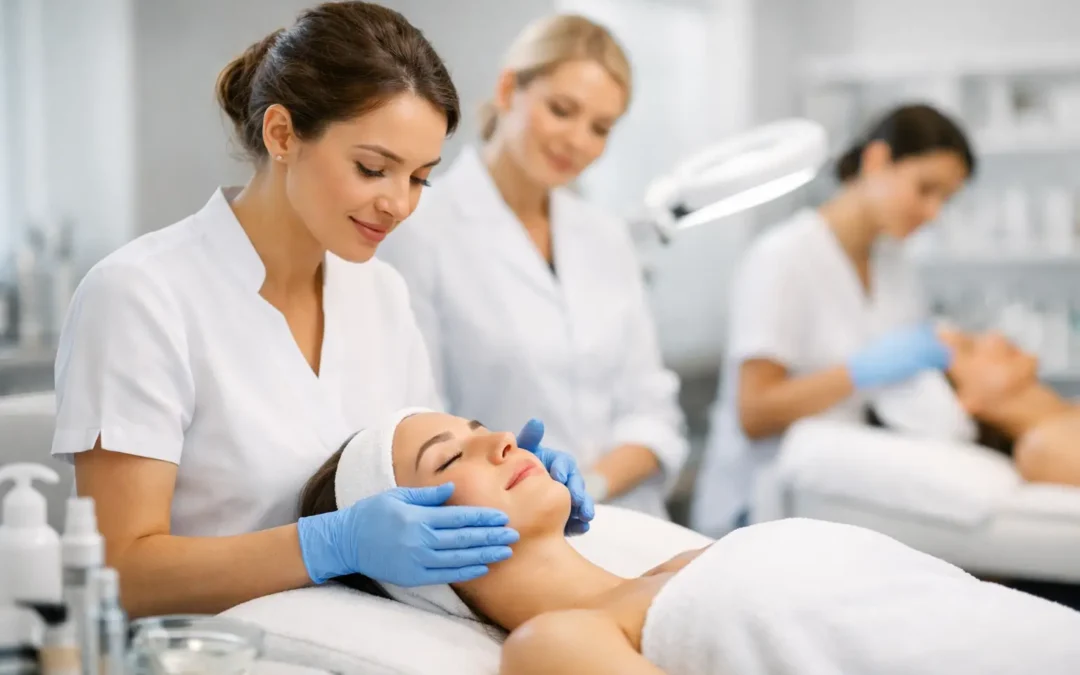
A client books a facial because they want visible care, expert guidance, and an hour that feels completely personalized. Delivering that level of service takes more than knowing the basic steps. An advanced facial certification course helps estheticians build the treatment knowledge, consultation skills, and professional confidence to create results-focused experiences clients remember and rebook.
For aspiring spa professionals and working estheticians ready to grow, advanced education can be a meaningful next move. It strengthens the skills employers look for while giving you more ways to serve a changing client base with care, precision, and sound professional judgment.
Why advanced facial training matters
Basic esthetics education creates an essential foundation: sanitation, skin analysis, product knowledge, facial massage, hair removal, and client care. Advanced facial education builds on that foundation by helping you think beyond a standard protocol. You learn to assess what the skin is showing you, adapt a service appropriately, explain recommendations clearly, and maintain a high standard of safety from consultation through aftercare.
That difference matters in a competitive spa environment. Clients are more informed than ever, and they often arrive with specific concerns such as dehydration, congestion, uneven texture, sensitivity, or the appearance of fine lines. They expect thoughtful answers, not generic promises. Advanced training prepares you to communicate professionally, set realistic expectations, and select services within your scope of practice.
It can also help you become a more valuable member of a spa or medical spa team. Employers want professionals who are dependable with clients, comfortable with modern protocols, and able to recommend appropriate home care without sounding pushy. When your education combines current techniques with supervised practice, you are better prepared to step into that role.
What an advanced facial certification course should teach
The strongest courses balance technical instruction with the client experience. You should leave with practical skills you can apply in a treatment room, not simply a certificate and a list of product ingredients.
Confident skin consultations
A great facial begins before the first product touches the skin. Advanced training should reinforce how to conduct a thorough consultation, review relevant client information, recognize contraindications, and document services clearly. You will also learn how lifestyle, environment, current routines, and client goals can influence a treatment plan.
Consultation is where trust begins. A client who feels heard is more likely to follow aftercare guidance, return for future appointments, and refer friends. This is also where professionalism protects both the client and the service provider. Knowing when to proceed, modify a service, or refer a concern is a critical part of advanced practice.
Customized treatment planning
No two clients bring the same skin needs to the treatment bed. Advanced facial education helps you move from following one routine to making informed adjustments. That may include product selection, exfoliation choices, massage techniques, masking strategies, and service pacing based on the client’s comfort and goals.
Customization does not mean overcomplicating every appointment. It means having a clear reason for each choice you make. Clients notice when a facial feels designed for them rather than repeated from the previous appointment.
Modern techniques and equipment awareness
The beauty industry continues to evolve, and continuing education helps you stay current. Depending on the course, advanced facial training may introduce enhanced exfoliation methods, facial massage approaches, treatment add-ons, and professional skin care technologies. The value is not just exposure to a new tool or technique. It is learning proper protocol, sanitation, client suitability, and the limitations of each service.
The exact services you may perform depend on local regulations, your prior training, workplace policies, insurance requirements, and professional scope. A reputable course will be transparent about those boundaries. Certification supports your education, but it does not replace licensing requirements or authorize services that are restricted to another regulated professional.
Product knowledge that supports real recommendations
Clients often ask what they should use between appointments. Advanced education can help you understand professional product categories, active ingredients, layering considerations, and aftercare language so your recommendations feel useful and responsible.
The goal is not to sell every client a full shelf of products. It is to recommend a realistic routine that supports the service they received and their individual goals. Honest, informed guidance builds loyalty far more effectively than a high-pressure sales approach.
Hands-on practice makes the difference
Watching a demonstration can introduce a technique. Performing it under the guidance of an experienced instructor is where confidence takes shape. Hands-on training gives you the opportunity to refine your pressure, timing, draping, product application, communication, and treatment flow while receiving feedback you can use immediately.
Small class sizes matter here. When instructors can observe your work closely, they can correct habits before they become routine and challenge you to improve the details that clients notice. You gain the repetition that turns a sequence of steps into a polished service.
Training with real or realistic client scenarios is equally valuable. Skin does not always present like a textbook example, and client conversations do not always follow a script. Practice helps you become calm and professional when a client has questions, changes their goals, or needs a modified approach.
At The Beauty Academy, career-focused learning is designed around practical experience, current techniques, and personal support. For students who want to enter the industry prepared to succeed, that kind of learning environment can make advanced education feel both achievable and relevant.
Who benefits most from advanced facial education?
An advanced course can be a smart fit for recent esthetics graduates who want more confidence before applying for spa roles. It can also serve experienced professionals who feel ready to refresh their skills, expand their menu, or return to the industry after time away.
Career changers may benefit as well, particularly if they are building a path toward professional skin care services and want education that reflects workplace expectations. The right starting point depends on your existing training. If you are new to esthetics, foundational education should come first. If you already understand the essentials, advanced training can help you develop a clearer specialty and stronger professional presence.
This path is especially valuable for people who enjoy combining science-informed skin care with service. Successful facialists are attentive listeners, detail-oriented practitioners, and encouraging educators. They know that a client may be seeking relaxation, visible improvement, or both, and they can deliver a service that respects those goals.
How certification can support your career path
A certification can signal initiative to prospective employers, but its real value comes from what you can do with the education. When you can conduct a confident consultation, maintain a clean and efficient treatment room, explain your services, and provide consistent care, you become easier to hire and easier for clients to trust.
Advanced skills may support opportunities in day spas, resort spas, salons with esthetics services, skin care clinics, and medical spa environments, depending on the requirements of the role and the regulations in your area. Over time, continued education can also support goals such as building a loyal clientele, moving into spa leadership, becoming a brand educator, or operating an independent business.
Income potential will vary by location, service offerings, client demand, employment structure, and your ability to retain clients. That is why the best career strategy is not simply adding services. It is building expertise, professionalism, and a reputation for excellent care.
Choosing the right course for your goals
Before enrolling, look closely at how the course is taught. Ask whether you will receive supervised hands-on practice, whether the curriculum reflects current industry standards, and whether instructors have real-world experience. Consider the learning environment too. Personal feedback is difficult to replace, especially when you are refining technical work.
Also look for a course that explains its credential clearly. You should understand what the certificate represents, what prerequisites are expected, and how the education fits with local rules and your intended career path. A school that answers those questions directly is demonstrating the same professionalism you will be expected to bring to clients.
Your next facial service could be the one that turns a first-time guest into a long-term client. Invest in education that helps you approach that moment with skilled hands, informed judgment, and the confidence to build the career you want.