
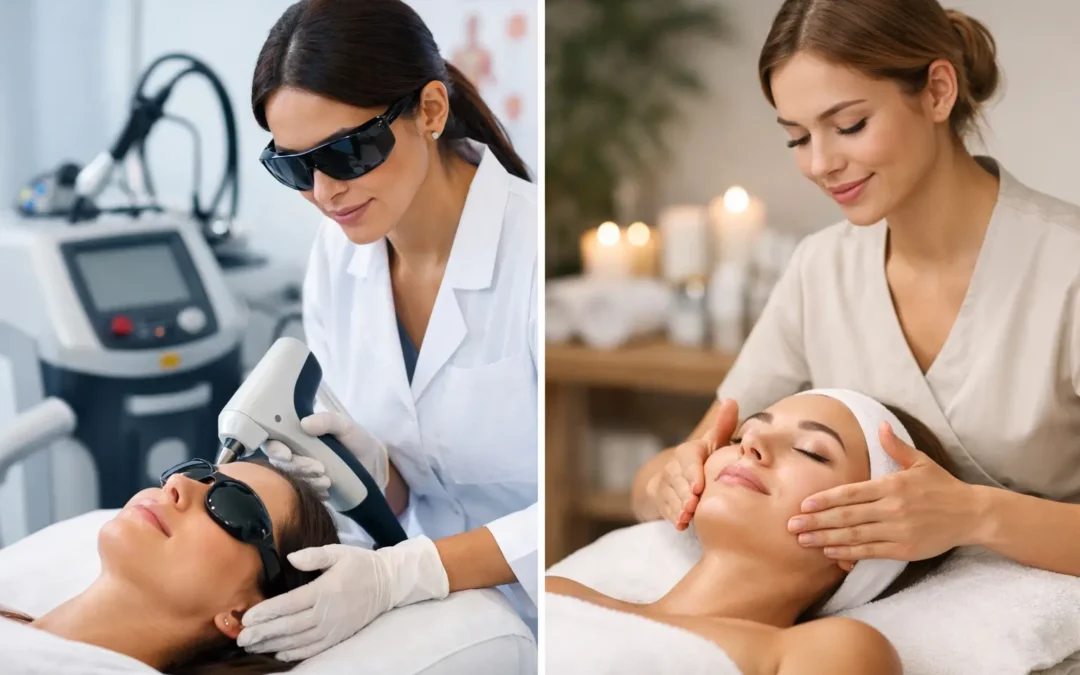
A client walks in looking for clearer skin, a more even tone, or support for visible signs of aging. What happens next depends on the professional they meet. When comparing medical spa training vs esthetics, the real question is not which path is better. It is which path matches the services you want to provide, the setting where you want to work, and the career you want to build.
Both paths can lead to creative, people-focused work in the beauty industry. Both require strong consultation skills, professional judgment, sanitation knowledge, and a commitment to helping clients feel confident. The difference lies in the depth of technical specialization, the equipment you may learn to use, and the type of workplace you may pursue after graduation.
Medical Spa Training vs Esthetics: The Core Difference
Esthetics training builds the foundation for professional skin care services. Students learn how to assess skin, recommend appropriate services and home-care routines, perform facials, provide hair removal, apply makeup, and create a relaxing, professional client experience. It is a strong fit for people who love hands-on skin care and want a versatile entry point into the beauty field.
Medical spa training, often called medical esthetics training, builds on skin care knowledge with a stronger focus on advanced treatments, modern technology, and a clinical-style service environment. Depending on the program and local regulations, training can include services such as advanced exfoliation techniques, microdermabrasion, laser or light-based technology education, and other equipment-driven treatments.
The distinction matters because a medical spa is not simply a spa with a more polished look. It is typically a results-oriented setting where client consultations, treatment planning, safety protocols, documentation, and collaboration with medical professionals may be part of the experience.
What You Learn in an Esthetics Program
A quality esthetics program is practical, creative, and centered on client care. You develop the skills to understand skin types and conditions, perform treatments with care, and communicate recommendations in a way that builds trust rather than pressure.
Core training commonly includes facial treatments, skin analysis, makeup application, waxing and hair removal, manicure and pedicure services, body treatments, sanitation, anatomy basics, and retail or client-service skills. While the service menu can vary by school and location, the goal is consistent: prepare you to deliver professional spa services confidently.
Esthetics can offer broad career flexibility. Graduates may pursue work in day spas, salons, resorts, beauty retail, wellness centers, or self-employed settings where permitted. For someone who wants a balanced mix of relaxation, beauty, skin care, and client connection, esthetics is a meaningful place to start.
It also gives you a valuable foundation if you later decide to specialize. Many successful medical spa professionals begin with a strong understanding of traditional skin care, consultation etiquette, and hands-on service standards.
What Medical Spa Training Adds
Medical spa training is designed for students who are drawn to the fast-growing advanced skin care market. The focus shifts from primarily relaxation-based services toward technology, treatment outcomes, and more detailed client protocols.
You may learn how advanced devices work, how to prepare clients for treatments, how to recognize contraindications, and how to follow strict sanitation and safety procedures. Programs may also teach consultation methods that help clients understand realistic treatment plans and appropriate aftercare.
This path can be especially appealing if you enjoy the science behind skin care as much as the artistry. You may be interested in pigmentation concerns, acne support, texture, signs of aging, or the way professional treatments and home-care routines work together over time.
However, advanced training does not mean every graduate can independently perform every medical or device-based procedure. Scope-of-practice rules, licensing requirements, supervision standards, and permitted services vary by jurisdiction. Some treatments require medical oversight, additional certification, or credentials beyond an esthetics diploma. A career-focused school should teach students to respect those boundaries and work within the standards that protect clients and professionals.
Choose Based on the Career Experience You Want
Your ideal workday can help make the choice clearer. If you picture creating a calm, restorative experience with facials, waxing, makeup, and personalized skin care, esthetics may be your strongest match. It offers a broad skill set that can travel across many beauty and wellness settings.
If you picture working with sophisticated equipment, discussing targeted treatment plans, and building expertise in advanced skin services, medical spa training may better fit your goals. You may thrive in an environment that feels more technical, detail-oriented, and results-driven.
Neither route limits your potential. Esthetics can be the right choice for a student who wants a versatile diploma and a well-rounded service foundation. Medical spa training can be the right choice for someone ready to focus on a specialized area of beauty. The best decision comes from understanding what each program actually teaches, not simply choosing the path that sounds more advanced.
Why Hands-On Training Makes the Difference
Skin care is not a career you learn through theory alone. Reading about a facial protocol is different from assessing a client’s skin, selecting products, maintaining professional draping, adjusting your technique, and explaining aftercare with confidence.
That is why hands-on practice should be a major factor in your decision. Look for training that gives you opportunities to work with real clients under instructor guidance, not just practice briefly on classmates. Client experience teaches timing, communication, adaptability, and professionalism – the skills employers notice from day one.
Small class sizes also matter. Instructors can correct your technique before habits form, answer questions in the moment, and help you connect classroom concepts to real services. Modern equipment matters as well, especially for students considering a medical spa path. You need training that reflects the tools, protocols, and expectations you are likely to encounter in the workplace.
At The Beauty Academy, career-focused education is built around practical training, experienced instruction, and the confidence students need to enter the beauty industry prepared to succeed.
Questions to Ask Before You Enroll
Before committing to an esthetics or medical spa program, ask specific questions about your training experience and career preparation. The answers will tell you far more than a program name alone.
Consider asking:
- How much supervised hands-on practice will I receive?
- Will I work with real clients during training?
- What equipment, techniques, and current products will I learn to use?
- How does the curriculum address safety, sanitation, consultations, and aftercare?
- What credentials or further certifications may be needed for advanced services in my area?
- How does the school prepare graduates for interviews, employment expectations, and professional growth?
A strong program should answer these questions clearly. It should show you where your education can lead while being honest about local regulations and the additional training some specialized services may require.
Your Training Can Grow With Your Ambition
You do not have to map out every stage of your career before your first class. Many beauty professionals begin with a broad esthetics education, develop their client service skills, and later pursue advanced medical spa certifications. Others know from the beginning that technology-based skin care is where they want to focus and choose specialized training earlier.
What matters most is choosing education that gives you more than a certificate. You need practical ability, professional confidence, and an understanding of how to create safe, positive experiences for every client. Those skills support career mobility whether you pursue a spa role, a medical spa opportunity, a retail education position, management, or eventually your own business.
The beauty industry rewards professionals who continue learning, stay current with techniques, and take client care seriously. Choose the path that excites you enough to practice, improve, and keep growing. Your future clients will feel the difference in every service you provide.