A great service can be undone in seconds by a dirty station, reused tool, or a client who does not feel protected. This salon hygiene standards guide is designed for future beauty professionals who want to build the habits employers, clients, and licensing boards expect from day one.
Hygiene is not an extra task that happens between appointments. It is part of the service itself. Whether you are creating a precision haircut, performing a facial, shaping brows, or delivering a barbering service, your cleanliness practices show clients that their comfort and well-being matter.
Why Salon Hygiene Standards Shape Your Career
Clients may not know every technical step behind a color formulation or facial protocol, but they notice hygiene immediately. A clean cape, freshly prepared bed, organized workstation, and properly handled tools create trust before you say a word. That trust is what brings clients back and encourages them to recommend you.
For an aspiring professional, strong sanitation practices also make you more employable. Salon and spa owners need team members who can protect the business, work efficiently, and follow established procedures without being reminded. Clean habits signal professionalism, accountability, and respect for the people in your chair or treatment room.
The details vary by service and by local licensing requirements. A barber may manage clippers, combs, straight razors, and neck strips, while an esthetician needs to consider applicators, linens, product dispensing, and treatment surfaces. The principle stays the same: prevent cross-contamination and keep every client-facing space safe.
Know the Difference: Cleaning, Sanitizing, Disinfecting, and Sterilizing
These terms are often used interchangeably, but they do not mean the same thing. Knowing the difference helps you choose the right process rather than treating every item the same way.
Cleaning removes visible dirt, hair, product residue, and debris. It is the first step for tools and surfaces because disinfectant cannot work properly through buildup.
Sanitizing reduces the number of germs to a safer level. Handwashing, laundering linens, and maintaining clean common areas are examples of sanitation practices.
Disinfecting uses an approved disinfectant to destroy many harmful microorganisms on hard, nonporous tools and surfaces. Follow the product label exactly, especially its required contact time. Spraying and wiping immediately may look clean, but it may not provide the disinfection the product is designed to deliver.
Sterilizing destroys all microbial life and is generally required for specific tools or environments, depending on the service and local rules. It is not a substitute for routine cleaning and disinfection. Future professionals should learn the standards that apply to their scope of practice and workplace.
Salon Hygiene Standards Guide: The Daily Non-Negotiables
A professional routine starts before the first client arrives. Begin with clean hands, clean attire, and a station that has been reset from the previous day. Check your tools, product containers, linens, and waste bins before service begins. A rushed setup often leads to skipped steps later.
Hand hygiene is one of the simplest and most visible practices. Wash hands thoroughly before and after each client, after handling waste, after cleaning, and whenever hands may be contaminated. Hand sanitizer can be useful when appropriate, but it does not replace washing hands when they are visibly soiled.
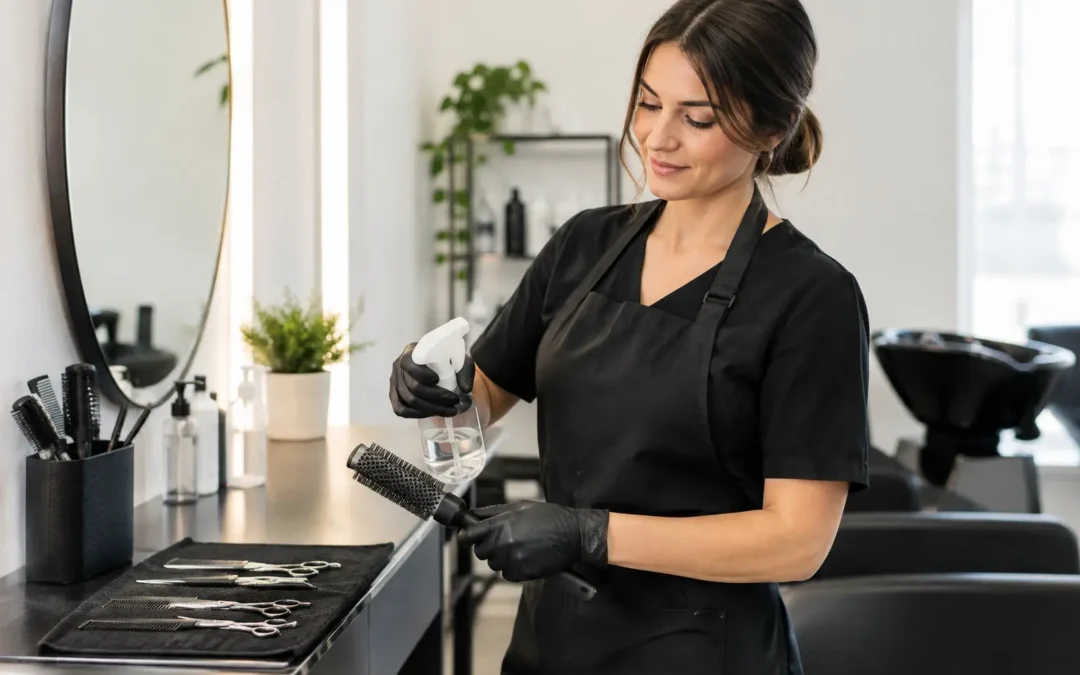
Your workstation should have a clear separation between clean and used items. Clean combs, brushes, tweezers, and implements should never share a container with tools that have already been used. A labeled system makes this easy in a busy salon: one area for clean, disinfected tools and another closed container for items waiting to be cleaned.
Use fresh linens, capes, neck strips, towels, and disposable supplies for every client. Never shake used linens, since doing so can spread hair, skin particles, and contaminants into the air. Place them directly into a covered hamper or designated laundry container.
High-touch surfaces deserve attention throughout the day. Chair arms, shampoo bowls, styling stations, treatment beds, light switches, door handles, and payment terminals can quickly collect residue and germs. Clean and disinfect them according to the product instructions and your workplace schedule.
Service-Specific Habits That Protect Clients
In hairstyling and barbering, hair must be removed from combs, brushes, clips, and tools before they are cleaned and disinfected. Clippers need special care. Remove loose hair, follow manufacturer instructions for cleaning, and use an appropriate disinfectant product without damaging the equipment. Never use a blade or tool on a client if it has been dropped, contaminated, or stored improperly.
Straight-razor services require an especially disciplined approach. Use a new blade for each client, dispose of it in an approved sharps container, and never reuse a blade. Neck strips and single-use items are small details with a major impact on client protection.
In esthetics and medical spa settings, avoid double-dipping into product containers. Use a clean spatula or single-use applicator to remove the amount of product needed, then discard the applicator after use. If you need more product, use a new applicator. This protects the product and prevents transferring bacteria between clients.
For facial and body services, prepare the treatment bed with fresh linens and disinfect hard surfaces between appointments. Follow glove protocols for services where there is a risk of contact with bodily fluids, broken skin, or certain chemicals. Gloves are not a replacement for handwashing, and they must be changed between clients and tasks.
Respond Calmly When Something Goes Wrong
Even experienced professionals face unexpected situations: a tool falls on the floor, a client arrives with an open cut, or a product becomes contaminated. The right response is not to hide the problem or improvise. Pause, remove the item from service, and follow the correct cleaning, disinfection, disposal, or referral procedure.
If a client has a visible condition that may be contagious or a service area has broken skin, do not proceed with a service that could worsen the concern or put others at risk. Explain your decision respectfully and professionally. Protecting a client may mean postponing an appointment, and that is a mark of sound judgment, not poor service.
Build Hygiene Into Your Hands-On Training
The best way to make hygiene automatic is to practice it in every service, not only when someone is evaluating you. Set up your station the same way each time. Reset it fully between guests. Ask instructors why a particular process matters, then repeat it until it becomes second nature.
At The Beauty Academy, hands-on learning helps students connect technical skill with the professional standards expected in real salon and spa environments. When you train with intention, you do more than learn how to perform a service. You learn how to create an experience that feels safe, polished, and worthy of client trust.
Your creative ability may earn a client’s attention, but your professionalism earns their confidence. Start treating hygiene as part of your signature service now, and you will enter your beauty career prepared to succeed with every client you serve.