
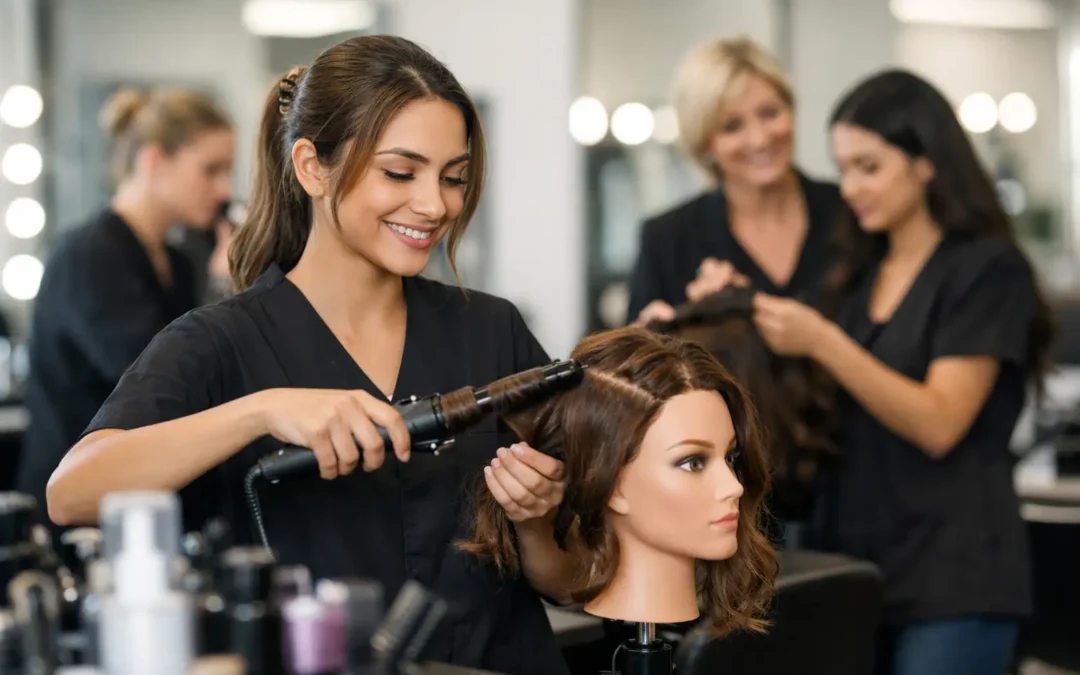
A beauty career becomes real the moment your work moves beyond a mannequin, a textbook, or a social media tutorial. The right cosmetology schools give aspiring professionals a place to practice, make corrections, build confidence, and learn how to deliver the experience clients expect. For students who want a creative career with practical skills and room to grow, that difference matters.
Whether you are finishing high school, changing careers, or ready to turn a long-time passion for beauty into a profession, school is more than a starting point. It is where you develop the technical ability, client awareness, and professional habits that help you walk into a salon, barbershop, spa, or medical aesthetics setting prepared to contribute.
What Great Cosmetology Schools Actually Teach
A strong beauty education is not limited to learning a service once and moving on. It teaches the reasoning behind the service: how to assess a client’s needs, choose appropriate products and techniques, work safely, manage timing, and create a finished result that earns trust.
Depending on the program, students may focus on hairstyling, barbering, esthetics, medical esthetics, or medical spa services. Each path has its own techniques, tools, and career opportunities. Yet the foundation is consistent: professional communication, sanitation, consultation skills, product knowledge, technical precision, and a genuine commitment to client care.
The best training also reflects what employers need now. Beauty changes quickly. Color trends shift, fades evolve, skin care technology advances, and clients arrive with higher expectations than ever. An updated curriculum helps students learn current methods while building the adaptable skills that remain valuable throughout a career.
Hands-On Practice Builds Real Confidence
Watching a demonstration is useful. Repeating the technique under the guidance of an experienced instructor is where growth happens.
Hands-on education lets students develop muscle memory and sound judgment. A hairstyling student learns how hair responds to tension, product, heat, and cutting angles. An esthetics student learns to read skin conditions, conduct thoughtful consultations, and adjust a service to the individual in front of them. A barbering student learns how to create clean lines and balanced blends while working efficiently.
Practice with real clients is especially valuable because every appointment is different. One client may have a clear vision; another may need help deciding what suits their lifestyle, face shape, or maintenance routine. Learning to listen, advise, and communicate clearly is just as important as mastering the service itself.
That is why prospective students should ask how much practical training is included. A program with meaningful supervised client experience can create a smoother transition from student to working professional.
How to Compare Cosmetology Schools
Choosing a school is a career decision, not simply an enrollment decision. Tuition, schedule, and location matter, but they should not be the only factors guiding your choice. Look for an environment that will challenge you, support you, and help you build skills employers recognize.
Look at Class Size and Instructor Access
Beauty education is personal. You need feedback on your technique, not just a grade at the end of a unit. In smaller classes, instructors can spend more time correcting posture, refining application methods, answering questions, and helping students work through challenges before they become habits.
Ask how instructors support students during practical work. Are they active on the floor? Do they have relevant industry experience? Can students get individual feedback? The answers can tell you a great deal about the learning environment.
Check the Tools, Equipment, and Learning Space
Your training environment should resemble the professional settings where you hope to work. Modern equipment and quality products give students experience with the tools they are likely to encounter in salons, spas, and clinics.
A clean, organized, professional space also reinforces the standards clients expect. This is particularly important in esthetics and medical aesthetics, where safety procedures, sanitation, and careful use of equipment are central to every service.
Ask How the Curriculum Connects to Employment
A credential is valuable, but career preparation goes further. The school should help students understand workplace expectations, client retention, retail communication, appointment flow, and professional presentation. These are the skills that help new graduates stand out during interviews and in their first role.
Employment readiness may also include portfolio development, resume support, interview preparation, and exposure to real client services. No school can promise that every graduate will follow the exact same path, because career outcomes depend on effort, specialization, location, and professional goals. But a career-focused program should make the route from training to opportunity clearer.
Consider the Schedule That Supports Your Goals
The ideal program schedule depends on your life. Recent graduates may be ready for a full-time training experience, while adult learners may need a format that works around family responsibilities or a current job. A schedule that is manageable helps you stay focused and get the most from every practical hour.
Convenience should be balanced with quality. A nearby campus is helpful, but it should also offer the program depth, instruction, and practical experience you need to move forward with confidence.
Choosing the Right Beauty Career Path
Cosmetology can lead in many directions, and students do not all want the same future. Some are drawn to the creative energy of hairstyling, where cutting, coloring, styling, and client relationships create a dynamic everyday career. Others are interested in barbering, a field that rewards technical consistency, detail, and strong community connections.
Esthetics appeals to students who are passionate about skin health, relaxation, and personalized care. Medical esthetics and medical spa services may suit those who want to work with advanced treatments and technology in settings that blend beauty, wellness, and clinical standards.
There is no single “best” path. The right choice depends on what energizes you. If you enjoy transformation and visual creativity, hair may be a natural fit. If you value precision and fast-paced service, barbering may be the stronger match. If you are fascinated by skin care and treatment-based services, esthetics or medical aesthetics could offer the direction you are looking for.
A reputable school can help you explore these options with practical insight rather than guesswork. Speak with admissions teams, tour the campus, observe the student clinic or salon environment, and ask graduates or instructors what a typical day in the field looks like.
The Professional Skills Clients Remember
Technical talent gets attention. Professionalism builds a lasting career.
Clients remember whether they felt heard, respected, and cared for. They remember if their appointment began on time, if the service was explained clearly, and if they left knowing how to maintain their results at home. These moments turn a first-time client into a loyal one.
Beauty school is an opportunity to build those habits early. Students learn to prepare their station, follow sanitation standards, manage a consultation, recommend appropriate products, and respond calmly when a service needs adjustment. These abilities create trust, and trust is one of the most valuable assets a beauty professional can have.
At The Beauty Academy, career-focused training is designed to pair current techniques with the practice, mentorship, and client experience students need to feel prepared for the next step. The goal is not simply to complete a program. It is to leave with a foundation you can build on for years.
Your Education Should Match Your Ambition
The beauty industry rewards people who keep learning. Your first program may lead to a salon position, a spa role, freelance work, advanced certification, management, education, or a business of your own. The path can change as your interests and experience grow.
That is why choosing a school with high standards is such a meaningful investment. Look for training that respects your goals, gives you room to practice, and prepares you to meet clients with both skill and confidence. The right education will not define the limits of your career. It will give you the ability to keep creating, growing, and building the future you want.