A cosmetology program can shape far more than your first job. It can influence how confident you feel behind the chair, how quickly you build a professional network, and whether you graduate prepared to work with real clients. When comparing private versus public cosmetology schools, the right choice is not simply about the school name or the lowest tuition. It is about finding training that matches your goals, learning style, schedule, and vision for your future.
For aspiring hairstylists, barbers, estheticians, and medical spa professionals, career readiness comes from consistent practice, knowledgeable guidance, and exposure to the standards clients and employers expect. Here is what to look for before you enroll.
Private Versus Public Cosmetology Schools: The Core Difference
Public cosmetology programs are often offered through community colleges, technical schools, or career centers funded in part by public resources. They may offer lower tuition for local residents, academic course options, and a familiar college setting. For students who want to combine beauty education with broader postsecondary studies, this structure can be appealing.
Private cosmetology schools are specialized institutions focused specifically on career training in beauty, wellness, and personal care. Their programs are often designed around the pace of the industry, with hands-on education, salon or spa environments, and instructors who bring current field experience into the classroom.
Neither path is automatically better for every student. The stronger question is this: Which school gives you the time, instruction, practical experience, and professional support you need to become employable and confident?
Look Beyond Tuition and Compare Total Value
Tuition matters, but the listed price rarely tells the whole story. Ask each school what is included in the cost of attendance. A program with a lower tuition figure may require separate purchases for kits, textbooks, uniforms, examination fees, or specialty product training. A higher-priced program may include tools, clinic access, certifications, and services that add meaningful value to your education.
Also consider your timeline. If a private school offers a focused, career-driven schedule that helps you complete training sooner, you may enter the workforce earlier. That does not make it the right choice in every situation, but it is worth weighing against the total cost of additional semesters, transportation, and time away from paid work.
Financial aid options vary by institution and program. Speak directly with an admissions or financial aid representative about available plans, eligibility requirements, payment schedules, and all expected expenses. Clear answers are a strong sign that a school respects your investment.
Hands-On Training Should Be a Priority
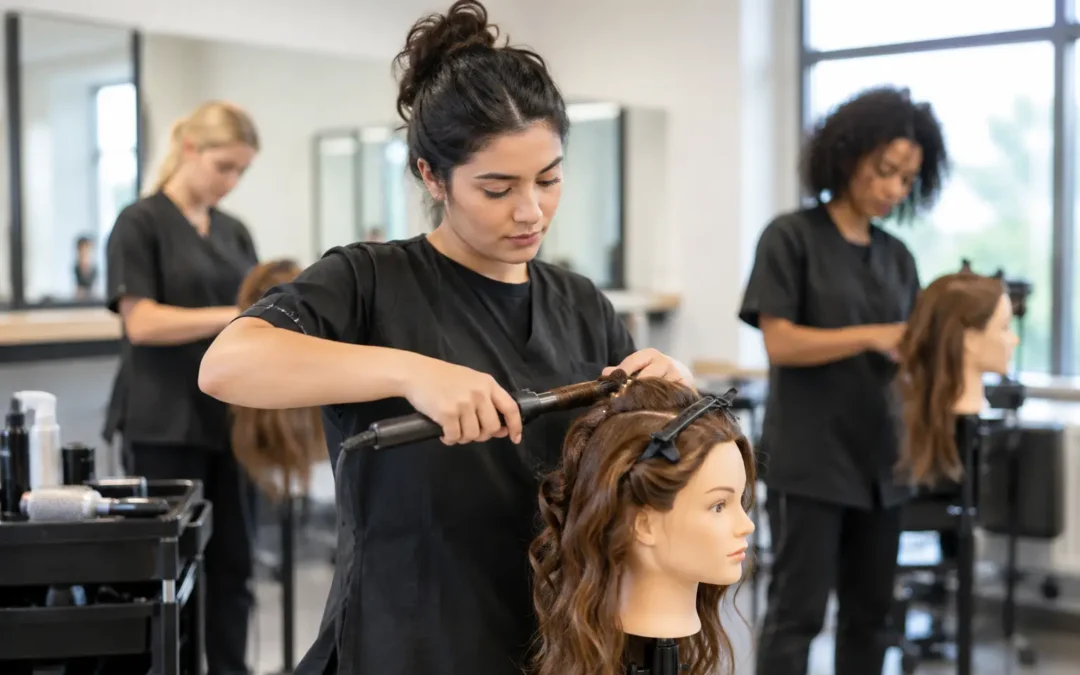
Beauty is a practical profession. Reading about a haircut, facial treatment, fade, color formulation, or client consultation is not the same as performing it. Your training environment should allow you to practice repeatedly, receive constructive feedback, and improve your technique under professional supervision.
Public programs can provide solid practical education, particularly when they have active student clinics and modern facilities. However, the number of hours spent with clients, the type of equipment available, and the range of services offered can vary significantly from one location to another.
Private schools often build their curriculum around intensive skill development. Small class sizes can give instructors more opportunity to notice your hand position, consultation approach, sanitation habits, timing, and client communication. That personal attention can make a major difference when you are learning technical services that require precision.
Ask About Real Client Experience
A student salon, barbershop, or spa clinic is one of the most valuable parts of a beauty education. It introduces you to the realities of professional service: greeting clients, assessing their needs, managing timing, recommending appropriate services, maintaining a clean station, and responding calmly when a result needs adjustment.
Before choosing a school, ask how often students work with guests and at what point in the program they begin. Find out whether services reflect what salons, barbershops, spas, and medical aesthetic settings actually provide. A busy clinic can help students graduate with more than technical ability. It can help them develop poise.
Evaluate Class Size and Instructor Access
Cosmetology training is personal. You are building skills with your hands, your eyes, and your ability to connect with people. If you need help correcting a sectioning pattern, improving a wax application, or understanding a treatment protocol, timely feedback matters.
Large classes are not always a problem, but they can make individual coaching harder to access. Private career schools frequently emphasize lower student-to-teacher ratios because close mentorship supports faster skill development. Instructors can spend more time demonstrating techniques, checking your work, and helping you turn feedback into progress.
When you tour a campus, pay attention to the energy of the classroom. Are students actively working? Are instructors visible and engaged? Do learners have access to the stations, tools, and products they need? The environment should feel professional, supportive, and focused on growth.
Check Whether the Curriculum Reflects the Industry
A license or diploma opens a door. Current skills help you step through it with confidence. Beauty trends, products, technology, and client expectations continue to evolve, so a program should do more than cover the minimum requirements for graduation.
Ask how often the curriculum is updated and whether students learn contemporary techniques that employers value. For hairstyling, that may include modern cutting, color placement, texture services, styling, and consultation skills. For barbering, it may include fades, beard design, hot towel services, and clipper control. Esthetics and medical spa training should address skin analysis, advanced treatments where permitted, sanitation, product knowledge, and professional client care.
A strong school also teaches the business side of beauty. Retail recommendations, appointment management, portfolio development, social media professionalism, rebooking, and client retention can all support long-term success. Talent gets noticed. Professional habits build a career.
Consider Schedule, Pace, and Personal Support
Public schools may follow a traditional academic calendar, with semester-based enrollment and set daytime schedules. That can be a good fit for recent high school graduates or students who prefer a college-style rhythm.
Private schools may offer more frequent start dates, accelerated options, or schedules designed for adult learners and career changers. If you are balancing work, family responsibilities, or a transition into a new field, flexibility can be a deciding factor. Be honest about what you can sustain. The fastest program is only helpful if you can attend consistently and absorb the training.
Support should extend beyond the first day of class. Look for a school that makes it easy to ask questions, understand requirements, stay accountable, and get help when challenges arise. A student-centered program does not lower standards. It gives you the structure to meet them.
Confirm Licensing, Accreditation, and Career Preparation
Every state has its own licensing rules for cosmetology and related beauty professions. Before enrolling, confirm that the program meets the education requirements for the license you intend to pursue in the state where you plan to work. If you may relocate, ask how your training could transfer and what additional steps another state may require.
You should also understand the school’s approval status, graduation requirements, and state board preparation process. A quality program will explain these details clearly rather than treating them as fine print.
Career preparation deserves the same level of attention. Ask whether the school provides resume guidance, interview coaching, employer connections, job leads, or opportunities to meet industry professionals. No school can guarantee a job, and that is a promise you should view carefully. Still, a school with strong local relationships and a record of preparing polished graduates can give you a valuable start.
Make the Choice in Person
Websites and brochures are useful, but a campus visit can reveal what numbers cannot. Tour the classrooms and clinic floor. Meet an instructor. Ask current students what they wish they had known before enrolling. Watch how people interact and whether the facilities reflect the professional setting where you want to work.
The best cosmetology school is not necessarily the cheapest, closest, or most familiar option. It is the one that gives you meaningful practice, current training, personal guidance, and a clear path toward the career you want. Choose a place where your ambition is taken seriously, then give yourself the training and support to build your dream career.