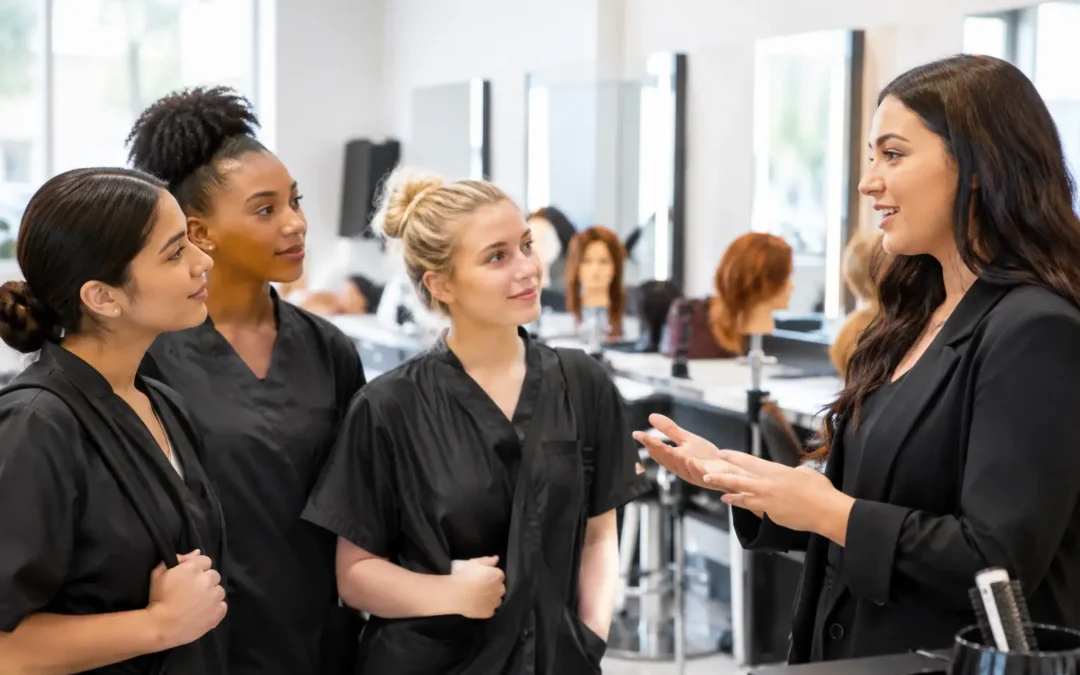
A beautiful campus can make a strong first impression, but your future career deserves more than a quick look at the reception area. The best questions for beauty school tours help you see what happens behind the scenes: how often students practice, who teaches them, what tools they use, and whether the program is built to prepare them for real work.
A school tour is your opportunity to look beyond brochures and ask direct questions about the experience you will have every day. Bring a notebook, listen carefully, and pay attention to whether the answers are specific. A career-focused school should be proud to show you how students learn, practice, and move toward employment.
Best Questions for Beauty School Tours: Start With Training
1. How much hands-on practice will I receive?
Beauty is a practical career. Whether you want to become a hairstylist, barber, esthetician, or medical spa professional, confidence comes from doing the work repeatedly under professional guidance.
Ask how early students begin practical training and how much of the program is dedicated to hands-on learning versus classroom theory. Find out whether you will practice on mannequins, classmates, models, and real clients. Each stage has value, but working with real clients is where students learn consultation skills, timing, communication, and the ability to adapt.
2. When do students work with real clients?
Client experience is one of the clearest signs that a program reflects the realities of the industry. Ask when students begin serving the public, how appointments are supervised, and which services students may perform as they advance.
A student salon or spa environment can teach far more than technical steps. You learn how to welcome a guest, understand their goals, recommend appropriate services, manage a schedule, and deliver an experience that encourages clients to return.
3. Who will be teaching me?
Your instructors shape your education, so ask about their professional backgrounds. Have they worked in salons, barbershops, spas, medical esthetics settings, or other areas connected to your chosen path? Do they continue learning as techniques, services, and products change?
Experienced educators bring more than textbook knowledge. They can explain what employers expect, correct small technical details before they become habits, and share perspective gained from serving real clients. Ask whether instructors are available for one-on-one feedback when you need extra support.
4. What is the student-to-teacher ratio?
In beauty education, personal feedback matters. A crowded classroom may make it harder to get timely corrections while you are learning a new cut, color application, facial protocol, fade, or advanced treatment.
Ask how many students are typically assigned to one instructor during both theory and practical sessions. Small class sizes can create more opportunities to ask questions, receive coaching, and build skills at a pace that supports your growth.
Questions That Reveal the Learning Environment
5. Can I see the classrooms, student salon, and equipment?
Do not only look at the space. Notice how it is being used. Are students actively practicing? Does the learning environment feel organized, professional, and welcoming? Are workstations clean and equipped for the services being taught?
Modern equipment and current tools matter because you want to train in an environment that feels relevant to the workplaces you may enter after graduation. A school should be able to explain how its facilities support each program, from hairstyling and barbering to esthetics and medical spa training.
6. How often is the curriculum updated?
Beauty services change quickly. Client expectations evolve, new products enter the market, and popular techniques can shift from season to season. Ask how the school keeps its curriculum current and whether students learn a mix of foundational techniques and in-demand services.
The right answer is not simply a long list of trends. Strong training gives you the fundamentals to perform safely and consistently, then shows you how to apply those skills to modern looks, treatments, and client needs.
7. What products and brands will I train with?
Ask what professional products, tools, and systems are used in class. You do not need to train on every brand in the market, but exposure to professional-grade products helps you understand performance, application, consultation, and retail recommendations.
Also ask whether your student kit is included in tuition, what it contains, and whether there are additional supply costs. Knowing this early makes it easier to compare programs fairly.
8. How do you teach consultation and client communication?
Technical skill gets clients through the door. Great communication helps keep them coming back. Ask how students learn to conduct consultations, set realistic expectations, discuss aftercare, and handle a client who changes their mind or has concerns.
These are career-building skills, especially for professionals who want to build a loyal clientele, earn tips, sell retail products ethically, or eventually run their own business.
Questions About Cost, Schedule, and Support
9. What is included in the full cost of the program?
Ask for a clear breakdown of tuition, registration fees, kits, textbooks, uniforms, examination costs, and any other required expenses. A lower tuition number is not always the better value if significant costs appear later.
It is also reasonable to ask about payment plans, financial assistance options, attendance requirements, and the school’s policy if you need to pause or adjust your schedule. The best program for you should fit both your career goals and your practical circumstances.
10. What scheduling options are available?
This question is especially valuable for adult learners, parents, and students balancing work. Ask whether the program offers daytime, evening, full-time, or part-time options, and how long each path takes to complete.
Flexibility can be helpful, but be clear about the trade-off. A schedule that works around your life may take longer to complete, while an intensive schedule may help you enter the field sooner. Choose the structure that gives you the best chance to attend consistently and stay focused.
11. What support is available if I need help?
Every student has a learning curve. Ask what happens if you need extra practice, have questions about a technique, or are struggling to keep up. Support may include additional coaching, instructor check-ins, study guidance, or opportunities to repeat a skill.
You should also ask how the school creates a respectful learning environment. Beauty careers are built around people, and your education should encourage professionalism, accountability, and confidence.
Questions That Connect School to Your Career
12. How does this program prepare students for licensing or certification requirements?
Requirements can vary by profession and location, so ask exactly what credential you will earn and what steps may be required after graduation. A transparent school will explain how its curriculum aligns with applicable training standards and what students need to do to move forward professionally.
This is also a good time to ask how theory, safety, sanitation, and practical competency are assessed throughout the program. Career-ready training should prepare you to perform services responsibly, not simply complete attendance hours.
13. What career support do graduates receive?
Ask how the school helps students transition from training into the workforce. Career support may include resume guidance, interview preparation, portfolio development, employer connections, or job leads in salons, spas, barbershops, and medical esthetics settings.
No school can guarantee that every graduate will follow the same path. Your results will depend on your effort, consistency, availability, and career goals. Still, a school with strong industry relationships and a clear focus on employability can give you a meaningful advantage.
14. Where do graduates typically work?
Ask for examples of the types of workplaces graduates enter. Do they work in independent salons, franchise locations, luxury spas, medical spas, resorts, retail environments, or as self-employed professionals? If possible, ask what entry-level roles look like and how graduates continue to advance.
This question helps you picture your options. A beauty education can lead to many directions, including specialized services, education, management, product sales, and entrepreneurship. The right program should give you a strong foundation while leaving room for your ambitions to grow.
15. Can I speak with current students or graduates?
A conversation with someone who has lived the experience can be especially helpful. Ask what surprised them about the program, how often they received feedback, whether they felt prepared for client work, and what they would tell a new student.
Listen for details rather than perfect answers. Honest experiences often reveal the rhythm of the program: the practice, the challenges, the support, and the progress that happens when students stay committed.
Pay Attention to What You See
The answers matter, but your observations matter too. Watch how instructors interact with students. Notice whether students appear engaged and whether the learning spaces reflect professional standards. Consider whether you can picture yourself practicing there, asking for help there, and growing there.
At The Beauty Academy, prospective students should feel encouraged to ask thoughtful questions because choosing a beauty school is a career decision, not just an enrollment decision. Look for a training environment that gives you practical experience, personal attention, current industry knowledge, and a clear path toward the work you want to do.
Bring these questions to your tour, then trust the evidence in front of you. The school that welcomes your ambition and shows you how it will help you build real skills may be the place where your dream career starts to feel possible.