
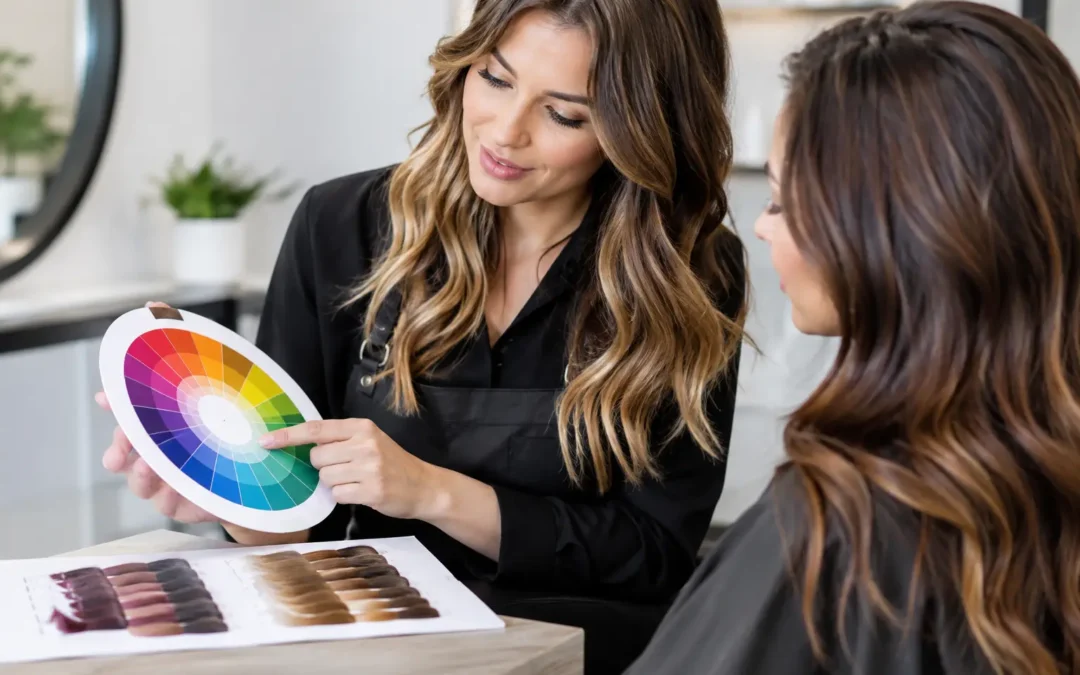
A client points to a bright, cool blonde photo, but their hair has warm gold bands from a previous color service. Another wants a rich brunette shade without the red tones they have struggled with before. These are not guesswork moments. Hair color theory gives stylists the knowledge to assess what is in front of them, make smart formulation choices, and create results that suit the client rather than simply copy a swatch.
For future hairstylists, color theory is one of the most creative and technical skills you can develop. It supports beautiful transformations, but it also protects hair integrity, builds client trust, and helps you handle the real-world corrections that fill salon appointment books.
What Is Hair Color Theory?
Hair color theory is the system stylists use to understand how pigments interact in the hair. It combines the color wheel, natural underlying pigment, hair level, tone, developer strength, and the client’s color history. Together, these factors determine what formula will produce the intended result.
The key idea is simple: hair does not begin as a blank canvas. Every client has a natural level, existing artificial color, warmth exposed during lightening, and a unique hair condition. A formula that works beautifully on one person can look completely different on another.
This is why professional colorists learn to diagnose before they mix. They ask what services the client has had, examine the hair in natural light, assess porosity and elasticity, and set realistic expectations. Technical knowledge creates the freedom to be creative with purpose.
The Color Wheel: Your Guide to Neutralizing Tone
The color wheel is one of the first tools students use when learning hair color theory. Opposite colors cancel each other out. In salon work, this principle helps correct unwanted tones and refine a final shade.
For example, violet helps neutralize yellow, blue helps neutralize orange, and green helps neutralize red. This does not mean every warm tone is a problem. Warmth can be intentional and flattering, especially in copper, golden blonde, caramel, and auburn looks. The color wheel helps a stylist decide whether to enhance warmth, soften it, or neutralize it.
A pale yellow blonde may need a violet-based toner for a cool, pearl-like finish. A client whose hair lifts to orange may need blue in the formula if the goal is ash brown. The right choice depends on the level of underlying pigment and the desired tone. Applying too much of the opposite color, or using it on the wrong level, can create dull, murky, or overly matte results.
Learning the wheel is not about memorizing a chart. It is about training your eye to recognize what the hair is showing you.
Level and Tone Are Different Things
A common early mistake is treating level and tone as the same thing. They work together, but they answer different questions.
Level refers to lightness or darkness. Most professional systems range from level 1, the darkest black, to level 10 or higher, very light blonde. Tone describes the color direction at that level, such as ash, gold, copper, red, violet, or neutral.
A level 7 can be a warm golden blonde, a copper blonde, or a cool ash blonde. The level may stay the same while the tone changes dramatically. Accurate consultations and formulas require stylists to identify both.
Why Underlying Pigment Changes Every Formula
When hair is lightened, it reveals warm underlying pigment. Darker hair often moves through red, red-orange, orange, and gold as it lifts. Lighter hair eventually reveals yellow and pale yellow. This predictable progression matters because it tells a stylist what needs to be managed during the service.
If a client wants a cool level 8 blonde but their hair has only lifted to a strong orange-gold level, adding a toner alone may not deliver the result they expect. The hair may need additional controlled lifting, a different target shade, or a plan completed across more than one appointment. Pushing hair too far to achieve a single-day result can compromise its condition.
This is where professional judgment matters. Great color is not only about reaching the lightest possible level. It is about choosing a result that looks polished, feels achievable, and respects the health of the hair.
Formulation Starts With a Strong Consultation
The best formulas begin before the color bowl comes out. A thorough consultation helps a stylist understand the client’s goals, maintenance preferences, budget, and history. A high-maintenance icy blonde and a soft dimensional balayage may both look beautiful, but they demand very different service plans and home care routines.
Ask about previous box color, professional services, henna, smoothing treatments, medication changes, and at-home products. These details can affect how hair processes. Even a client who says their hair is “natural” may have old color lingering through the mid-lengths and ends.
Then assess the canvas. Is the hair virgin, previously colored, uneven, porous, resistant, dry, or fragile? Are there bands from earlier applications? Does the client have gray hair that requires coverage? A colorist who understands these variables can formulate with greater precision and explain the process honestly.
A strand test can be especially valuable when the hair history is unclear or a major change is planned. It gives useful information about lift, timing, tone, and hair strength before a full service begins.
Permanent, Demi-Permanent, and Semi-Permanent Color
Color theory also includes knowing which type of color is appropriate for the goal. Not every service requires permanent color, and choosing the gentlest effective option is a professional skill.
Permanent color is often used for gray coverage, significant color changes, or lifting natural hair within its capabilities. Demi-permanent color is a versatile choice for toning, refreshing faded ends, blending gray, deepening a shade, and adding shine. Semi-permanent color can enhance tone or create temporary fashion effects without the same level of commitment.
The right product choice depends on the desired result, the hair’s condition, and the maintenance plan. For instance, a client who wants richer brunette dimension may benefit from a demi-permanent gloss rather than repeated permanent color through the ends. That approach can preserve softness while bringing faded color back to life.
Color Correction Is Where Theory Becomes Confidence
Color correction can sound intimidating, but it is often a series of clear technical decisions. A correction may involve removing unwanted artificial pigment, filling hair before going darker, evening out banding, pre-pigmenting porous areas, or neutralizing unwanted warmth after lifting.
The first rule is to avoid promising an exact outcome before examining the hair. Correction services can be unpredictable because previous chemical services affect how the hair reacts. A responsible stylist explains the likely process, possible limitations, expected maintenance, and when multiple appointments may be safer.
For example, a client with uneven, faded blonde who wants a deep chocolate brown cannot always receive one flat dark formula from roots to ends. The porous blonde lengths may grab color and turn muddy or too cool. Filling with warm pigment first can replace what was removed during lightening and create a richer, longer-lasting brunette result.
This type of work is why hands-on education matters. Students need more than product knowledge. They need guided practice, instructor feedback, and experience working through consultations and formulations in real time.
Building Color Skills Through Hands-On Practice
Reading about formulas is valuable, but confidence grows when you apply color theory to different heads of hair. Every client offers a new lesson in texture, density, porosity, previous color, and personal style.
In a career-focused hairstyling program, students learn how to section neatly, apply color efficiently, monitor processing, rinse correctly, tone intentionally, and finish the service with a polished style. They also learn how to communicate. Clients want to know what is possible, how long their appointment will take, what maintenance looks like, and how to care for their color between visits.
At The Beauty Academy, hands-on learning and guidance from experienced professionals help future stylists connect technical knowledge with salon-ready decision-making. Small class settings can make a meaningful difference when you are learning to assess a formula, correct a challenge, and build the calm confidence clients notice.
The Professional Habit That Makes Colorists Better
Keep records. After each color service, document the client’s starting level, existing tone, formula, developer, processing time, application method, and final result. Include notes on how the hair responded and what you would adjust next time.
These records turn every appointment into experience you can use again. They also allow clients to return with confidence because their colorist understands their history. Over time, your notes become a personal reference library that strengthens speed, consistency, and service quality.
Hair color is part science, part artistry, and part listening. The next time you see a dramatic before-and-after, look beyond the final photo. Think about the consultation, the assessment, the underlying pigment, and the informed choices that made that result possible. That is where a lasting color career begins.