
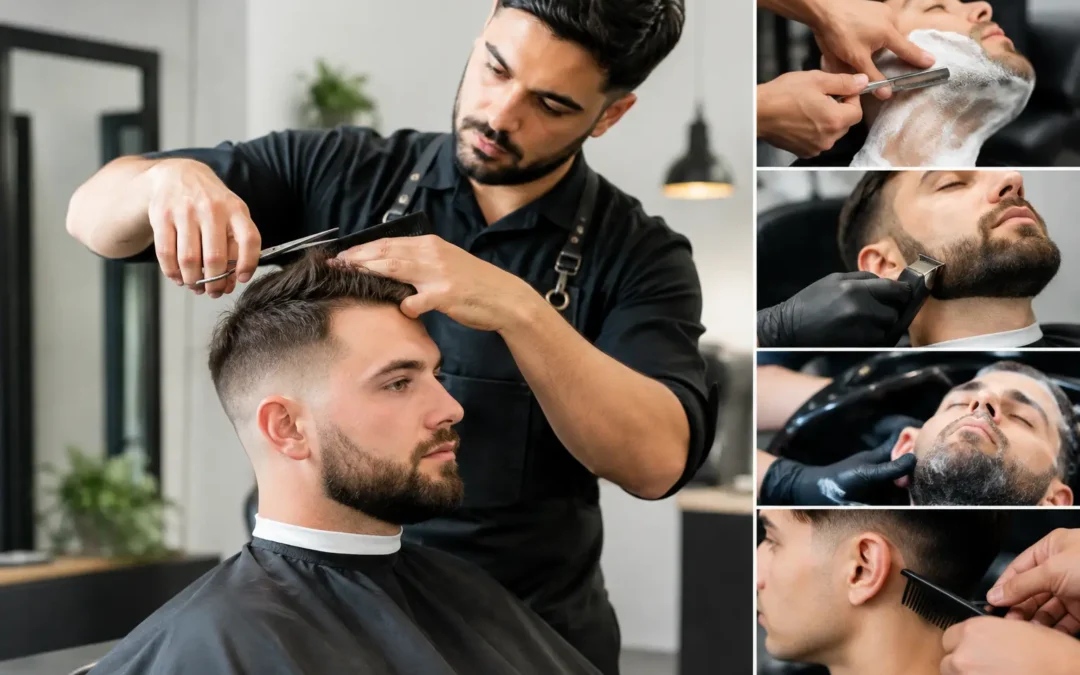
A great haircut may bring a client through the door, but the ability to deliver a complete, confident service is what brings them back. The barber services worth learning are the ones that build technical range, respond to real client needs, and help you create a career with room to grow. For aspiring barbers, learning more than one signature cut is not about doing everything at once. It is about building the professional foundation to work with more clients, earn trust, and create results people recommend.
Barbering is a hands-on career. Your eye for detail, consultation skills, tool control, and client experience all matter. Training that gives you regular practice, instructor feedback, and opportunities to work with real clients can turn interest in the craft into career-ready ability.
1. Precision Fades and Tapers
Fades and tapers are central to modern barbering. From low fades and mid fades to skin fades and classic tapers, clients often ask for subtle variations that require clean technique and a clear understanding of head shape, hair density, and growth patterns.
A strong fade is not simply short hair on the sides. It is a controlled transition with no visible weight lines, balanced proportions, and a finish that works with the client’s desired style. Learning clipper-over-comb work, guard selection, lever control, and detailed blending gives you the ability to personalize every appointment.
This service is worth developing early because it creates repeat business. Many clients maintain a fade every two to four weeks, which can help a new barber build a dependable schedule. The trade-off is that fades demand patience. Rushing through the blend may save a few minutes, but it can cost the polished result clients expect.
2. Classic and Contemporary Scissor Cuts
Clipper skills are essential, but scissors open the door to a broader range of looks. Longer textured styles, business cuts, layered shapes, side parts, and modern crops all require confident sectioning and cutting technique.
Learning scissor cuts also helps you work with clients who want a more natural finish than a tightly faded style. You will need to understand elevation, overdirection, weight distribution, and how to create shape without taking off too much length. These techniques may sound technical at first, but they become practical tools for making better decisions behind the chair.
A barber who can move comfortably between clippers and shears is better prepared to serve different ages, hair types, and personal styles. That versatility can make your services more valuable in a barbershop, salon, or independent setting.
3. Beard Trims and Beard Design
Beard grooming is one of the most valuable barber services worth learning because it can transform a client’s appearance quickly. A well-shaped beard frames the face, supports the haircut, and gives the client a finished, intentional look.
Professional beard work starts with consultation. Some clients want crisp lines and a defined jaw, while others prefer a softer, fuller shape. Face shape, beard density, skin sensitivity, and at-home grooming habits all influence the service. Learning to map the neckline, balance the cheeks, trim bulk, and create symmetry helps you deliver results that feel customized rather than copied.
Beard trims can also be a smart addition to haircut appointments. They create an opportunity to provide more complete grooming while helping clients maintain a consistent look between major style changes. Clean tools, careful sanitation, and a calm approach are especially important when working close to the skin.
4. Hot Towel Shaves
A traditional hot towel shave brings craft, comfort, and premium service together. It is an experience many clients cannot easily recreate at home, which makes it a meaningful way to stand out.
The service requires more than a steady hand with a straight razor. You need to prepare the skin, manage lather, understand beard direction, maintain the right razor angle, and use proper sanitation throughout the appointment. Skin analysis matters too. A client with irritation, acne, sensitivity, or certain skin conditions may need an adjusted approach or may be better served by another grooming option.
When taught correctly, shaving services build confidence in your technical control and client care. They also reinforce the professional habits that employers value: cleanliness, attention to detail, consultation, and consistent service standards.
5. Hair and Scalp Treatments
Clients increasingly want grooming services that support the health and appearance of their hair and scalp. A basic treatment service can include scalp cleansing, exfoliation where appropriate, conditioning, massage, or product recommendations based on the client’s needs.
You do not need to promise dramatic results to provide value. A thoughtful treatment can make hair feel cleaner, improve manageability, and give clients a relaxing break in their day. The key is knowing your scope of practice and recognizing when a concern should be referred to a medical professional.
For a barber, this skill strengthens consultations. You learn to ask better questions about dryness, product buildup, flaking, styling challenges, and maintenance routines. That knowledge helps clients make practical choices and positions you as a trusted grooming professional, not just someone who performs a quick cut.
6. Styling and Finish Work
The appointment does not end when the cutting is finished. Styling is where the haircut comes to life and where clients learn how to recreate the look at home.
Practice blow-drying, directional styling, product application, and finishing techniques for different textures and lengths. A matte paste, pomade, cream, or texture spray can all produce different effects, but the right choice depends on the desired finish and the client’s hair type. Using too much product can weigh hair down, while using too little may not provide enough control.
This is also a chance to educate without sounding pushy. Show the client how much product to use, how to warm it up in their hands, and how to apply it from roots to ends when needed. Small, useful guidance can make a client feel more confident and more likely to return.
7. Consultation and Client Experience
Consultation is a service skill, even though it does not involve a clipper or razor. Before beginning, ask what the client likes about their current style, what they want to change, how much time they spend styling, and how often they plan to return. Confirm expectations before the first section is cut.
Clear communication protects both the client and the barber. If a requested style will not work the same way with a client’s hair texture, density, or current length, explain what is realistic and offer a tailored alternative. Honest recommendations build more trust than promising an exact result that cannot be achieved in one appointment.
Client experience also includes punctuality, sanitation, professional conversation, and a clean station. These details may not appear in a haircut photo, but they strongly influence whether a client books again or refers a friend.
Building Skills That Lead Somewhere
The best barbering education connects individual techniques to the reality of the industry. You need time to practice fades, shaving, scissor work, beard grooming, and styling, but you also need constructive feedback on how to improve. Small class sizes and experienced instructors can make a real difference when you are developing precision and speed.
At The Beauty Academy, hands-on barber training is designed to help students build those abilities through current techniques, modern tools, and practical experience. Working with real clientele helps future professionals understand that every service requires both technical skill and personal attention.
Your career does not have to begin with every service perfected. Begin by learning each one with care, practicing consistently, and staying open to feedback. Every clean blend, thoughtful consultation, and satisfied client gives you another reason to believe you are prepared to succeed behind the chair.