A client can notice the difference between a treatment performed from a textbook and one delivered by a professional who understands skin, safety, consultation, and care. So, what is medical spa training? It is career-focused education that prepares aspiring beauty professionals to provide advanced esthetic services in a medical spa environment with skill, confidence, and a strong respect for scope of practice.
Medical spas sit at the meeting point of beauty, wellness, and clinical standards. That makes training more involved than learning a single service or technique. Students need practical experience, current product and device knowledge, and the communication skills to help clients feel informed and comfortable from consultation through aftercare.
What Is Medical Spa Training?
Medical spa training is specialized education for people who want to work in med spas, advanced skin care clinics, wellness centers, or related beauty settings. Programs commonly build on foundational esthetics knowledge while introducing more advanced treatments, professional protocols, sanitation requirements, and client-care expectations.
The goal is not simply to teach students how to operate equipment. Strong training helps students understand why a treatment may be appropriate, when it may need to be postponed, how to identify concerns that require referral, and how to support a safe, positive client experience.
Depending on the program and local regulations, medical spa education may cover services such as advanced facials, chemical exfoliation, microdermabrasion, dermaplaning, laser and light-based technology theory, body treatments, and non-invasive skin rejuvenation procedures. Some services may require additional certification, physician oversight, or qualifications that vary by location. A reputable school teaches students to work responsibly within the rules that apply to their role.
Why Medical Spa Education Goes Beyond Basic Esthetics
Basic esthetics creates an essential foundation. Students learn skin analysis, facial techniques, hair removal, makeup application, sanitation, and professional client service. Medical spa training takes that foundation further by placing greater emphasis on treatment planning, skin concerns, technology, documentation, and advanced service protocols.
Clients seeking medical spa services often have specific goals. They may want support with visible signs of aging, uneven texture, acne-prone skin, discoloration, or overall skin maintenance. They expect informed recommendations and clear answers. That means a medical spa professional must be able to listen carefully, conduct a thoughtful consultation, explain realistic outcomes, and provide aftercare directions clients can follow.
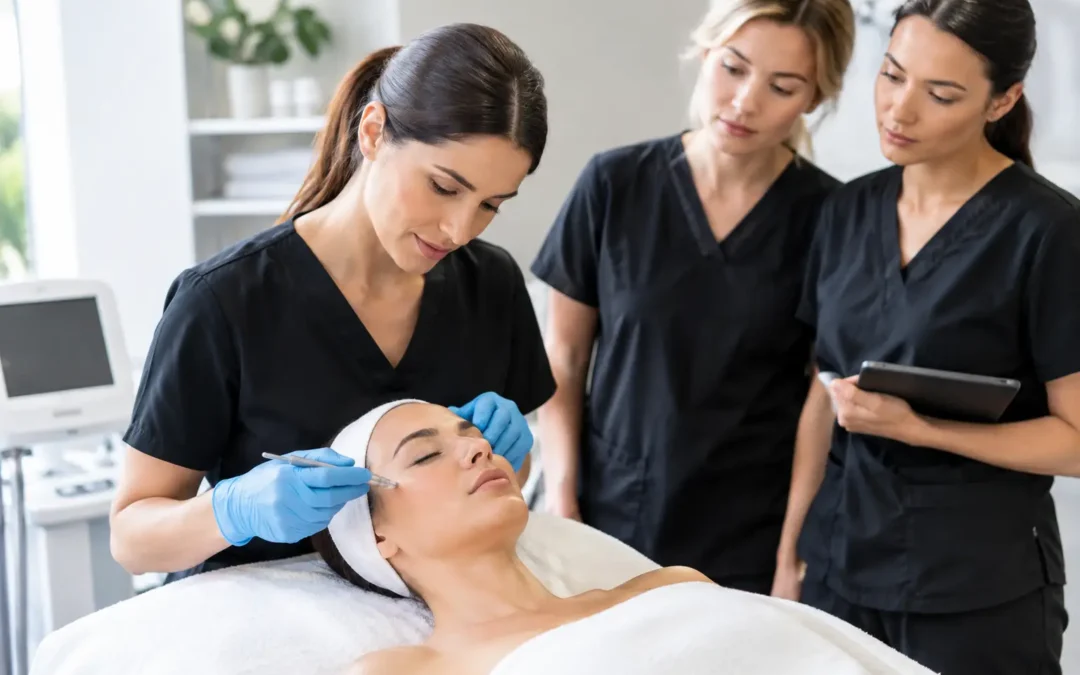
This is where hands-on learning matters. Reading about a device or watching a demonstration can build awareness, but it does not replace supervised practice. Students gain confidence when they prepare treatment spaces, consult with real clients, adapt their approach to different skin types, and receive immediate feedback from experienced instructors.
At The Beauty Academy, career-focused training is designed to connect classroom knowledge to the standards students will encounter in professional beauty environments. Small class sizes and practical instruction give future professionals more opportunities to ask questions, refine their technique, and build the confidence employers value.
What Students Learn in Medical Spa Training
The exact curriculum will differ by school and credential, but quality programs connect technical ability with client safety and business readiness. Students should expect a balanced learning experience rather than a course focused only on trendy treatments.
A well-rounded medical spa program often includes these core areas:
- Skin anatomy, physiology, and common skin concerns
- Advanced facial methods, exfoliation, and skin rejuvenation concepts
- Client consultations, contraindications, treatment records, and aftercare
- Infection control, sanitation, workplace safety, and professional ethics
- Product knowledge, retail recommendations, and client retention practices
- Equipment theory and supervised practical training where permitted
The science behind the skin is especially valuable. Professionals do not need to diagnose medical conditions, but they do need to recognize when a client’s concern is outside their scope. Knowing when to pause, ask questions, or refer a client to an appropriate health professional protects both the client and the practitioner.
Communication is another major part of the curriculum. A technically excellent treatment can still fall short if a client feels rushed, confused, or pressured. Medical spa professionals learn how to set expectations, discuss treatment plans honestly, and recommend home care without making unrealistic promises.
Hands-On Practice Builds Career Confidence
Medical spa work is personal. Every client brings a different skin history, comfort level, and reason for booking an appointment. Practical training gives students the chance to build their judgment in a supported environment before entering the workforce.
In a hands-on setting, students learn how to prepare a clean and professional treatment room, complete consultations, select appropriate products, perform services according to protocol, and communicate throughout the appointment. They also learn that the best approach is not always the most aggressive one. Sometimes a client needs a gentler service, more preparation, or a referral before moving forward.
Working with real clientele is particularly valuable because it teaches timing, professionalism, and adaptability. A student may feel fully prepared after practicing on classmates, then discover that client service requires another level of attention. Building rapport, responding calmly to questions, and maintaining a polished experience are all skills that improve through guided repetition.
Modern equipment also matters. The medical spa field changes quickly as technologies, products, and treatment expectations evolve. Training on current tools helps students graduate with familiarity, but equipment alone does not create expertise. The real advantage comes from learning the safety protocols, treatment logic, and client-centered decision-making behind each service.
Credentials, Regulations, and Scope of Practice
One of the most common questions from future students is whether medical spa training allows them to perform every service offered in a med spa. The honest answer is that it depends.
Rules differ by state, province, and local jurisdiction. They can also depend on the type of treatment, the professional license or certification held, and whether a medical professional must supervise the service. Injectables, for example, are not generally performed by estheticians and require appropriately qualified medical providers. Certain laser or energy-based services may also have specific training and oversight requirements.
The right program will not blur those lines. Instead, it will help students understand their role, develop the qualifications relevant to their career path, and recognize the value of continuing education. This is a field where responsible professionals keep learning as standards, services, and technologies change.
Before enrolling, ask clear questions about the credential you will earn, the practical services included in training, the qualifications of instructors, and how the program addresses local regulations. A school should be transparent about what its training prepares you to do and what may require additional education or licensing.
Career Paths After Medical Spa Training
Medical spa training can support a range of career goals. Many graduates pursue positions as medical estheticians, skin care specialists, spa technicians, treatment coordinators, or client consultants. Others combine medical spa knowledge with a broader esthetics background to work in day spas, salons, dermatology-adjacent clinics, wellness centers, or cosmetic retail environments.
There is also room to grow. With experience, professionals may move into spa management, education, sales representation, advanced certification, or business ownership. The strongest career opportunities usually go to people who pair excellent service skills with professionalism, reliability, and a commitment to ongoing learning.
For career changers, medical spa education can offer a practical route into a people-focused profession with creative and technical elements. For recent graduates, it can provide a structured start in an industry where employers look for confidence, polish, and current hands-on skills. The path will look different for every student, but quality training creates a stronger starting point.
Choosing a Medical Spa Training Program
When comparing schools, look past the course title. Ask how much supervised practical work is included, whether students work with real clients, how current the curriculum is, and how accessible instructors are for individual feedback. Low student-to-teacher ratios can make a meaningful difference when you are learning detailed techniques and building confidence.
Consider the learning environment as well. A professional setting with modern tools, clear safety standards, and instructors who understand employer expectations can help students transition more comfortably into the workplace. The best program is not necessarily the one that promises the fastest result. It is the one that gives you a credible foundation and prepares you to keep developing after graduation.
A medical spa career rewards professionals who combine care with capability. Choose training that lets you practice, ask questions, and grow into the kind of practitioner clients trust and employers are proud to hire.