
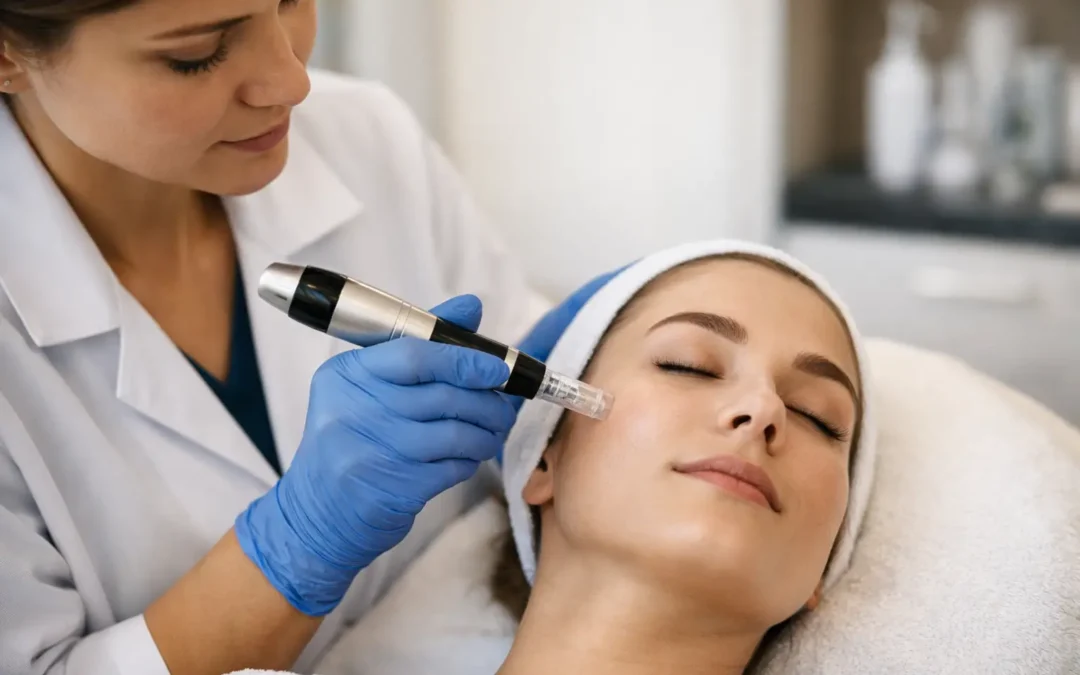
A microneedling appointment may look like a natural next step for an esthetician who loves advanced skin care. But can estheticians perform microneedling? The honest answer is: sometimes, and only within the rules of the state where they work. A device, a certificate, or a medical spa job title does not automatically make the service legal to provide.
For aspiring skin care professionals, that distinction matters. Your training should build confidence and opportunity, while also helping you understand where your professional scope begins and ends. Microneedling can be a valuable specialty in the right setting, but a successful career is built on informed decisions, safe practices, and credentials that match the services you offer.
Can Estheticians Perform Microneedling in the U.S.?
There is no single nationwide rule. Esthetician licensing is regulated state by state, usually through a board of cosmetology, barbering, or health professions. One state may permit licensed estheticians to perform limited cosmetic microneedling under defined conditions. Another may restrict any procedure that punctures living skin to medical professionals. A third may allow it only when a physician or other qualified medical provider delegates the service according to state law.
This is why online advice can be misleading. A creator in one state may legally use a certain device, while an esthetician in another state could face disciplinary action for providing the identical treatment. Before adding microneedling to a menu, review your current state board rules, local health requirements, and the policies of the spa, salon, or medical practice where you work.
In many jurisdictions, the key question is whether the procedure penetrates beyond the outermost layer of the skin. Traditional esthetics services generally focus on the surface of the skin. Once a treatment uses needles to create controlled channels, regulators may classify it as an invasive or medical procedure.
Depth is not the only factor
Needle depth often comes up first, and for good reason. Some states that allow cosmetic microneedling set a maximum depth or describe the treatment as limited to superficial skin. Yet depth alone does not settle the issue. Regulators may also consider the device type, whether blood is drawn, whether topical anesthetic is used, the treatment area, and the claims made to clients.
For example, advertising a service as a treatment for scars, hair loss, melasma, or a medical skin condition can raise a different concern than describing a cosmetic service focused on the appearance of texture or radiance. Estheticians should never diagnose conditions or promise medical outcomes unless their credential and state law clearly permit that role.
Radiofrequency microneedling deserves special caution. Because it combines needles with energy-based technology, it is frequently treated as a medical procedure and may require a licensed medical professional to perform it. Do not assume that being permitted to use one cosmetic needling device means you can use every device marketed as microneedling.
Medical Oversight Does Not Erase Scope Rules
Working in a medical spa can create exciting career options, but it does not automatically expand an esthetician’s license. A physician’s presence, a medical director arrangement, or an employer’s internal training policy cannot override state scope-of-practice law.
Where delegation is permitted, the delegating provider must follow the requirements of that state. Those rules may address supervision level, written protocols, client screening, training, recordkeeping, emergency procedures, and the types of tasks that can be delegated. In some states, delegation is not allowed for an invasive treatment at all.
This is a professional protection issue as much as a legal one. If a complication occurs, such as infection, prolonged inflammation, pigment changes, scarring, or an allergic reaction, the practitioner and business may be asked whether the treatment was within scope and performed according to appropriate standards. Staying within your license protects your clients, your reputation, and the career you are working hard to build.
What Safe Microneedling Practice Requires
Legal permission is the starting point, not the finish line. Even when a state allows estheticians to perform a version of microneedling, practitioners need hands-on education that addresses both technique and risk management.
A quality advanced training experience should teach you how to assess whether a client is an appropriate candidate, recognize contraindications, maintain infection-control standards, and provide realistic aftercare guidance. You should understand when to postpone a service and when to refer a client to a medical provider.
Common reasons to delay or decline treatment may include active acne lesions, open wounds, a current skin infection, a history of certain scarring concerns, recent use of medications that affect healing, pregnancy considerations, or recent aggressive skin treatments. A thoughtful consultation is not a formality. It helps prevent avoidable complications and establishes trust.
Sanitation is equally nonnegotiable. Single-use needle cartridges must be disposed of properly, treatment surfaces must be disinfected, and practitioners must follow blood exposure and personal protective equipment procedures. Reusing needles, cutting corners on cleaning, or treating a client with compromised skin is never worth the risk.
Clients also need clear expectations. Microneedling is not a quick fix, and healthy skin results depend on factors such as skin type, treatment goals, home care, and appropriate timing between sessions. Ethical providers explain what the service can and cannot do instead of relying on dramatic promises.
A Smart Career Path for Future Estheticians
If advanced skin services are part of your career vision, begin with a strong esthetics education. You need a solid foundation in skin anatomy, product knowledge, client consultation, sanitation, contraindications, and professional ethics before pursuing specialized modalities.
After earning the license required in your state, choose continuing education carefully. Look for training that includes supervised practical work, current safety protocols, device-specific instruction, and transparent discussion of legal scope. A certificate of completion can demonstrate education, but it is not the same as a state-issued license or legal authorization to provide a treatment.
It also helps to think beyond one trending service. Employers value professionals who can create safe, customized client experiences across a well-developed menu of services. Skills in skin analysis, advanced facials, chemical exfoliation where permitted, client communication, retail recommendations, and treatment planning can strengthen your employability while you build toward more specialized work.
At The Beauty Academy, career-focused beauty education is designed to help students develop the practical skills, professional confidence, and industry awareness needed to move forward with purpose. Small-class, hands-on learning can make a meaningful difference when you are preparing to work with real clients and make informed decisions about your future specialties.
Questions to Ask Before Offering the Service
Before you perform or promote microneedling, get clear answers from the right sources. Ask your state licensing board whether your exact license level permits the procedure, whether there is a depth limit, and whether medical delegation changes the answer. Confirm the rules for the specific device you plan to use, not just the general term “microneedling.”
Then ask your employer about written protocols, supervision, liability coverage, client consent forms, and emergency procedures. If the answers are vague, conflicting, or based only on what another spa is doing, pause. Professional standards should be documented and verifiable.
A beautiful career in esthetics is not about offering every service as quickly as possible. It is about becoming the professional clients and employers can trust – skilled, prepared, safety-minded, and ready to grow as your education and legal scope allow.