
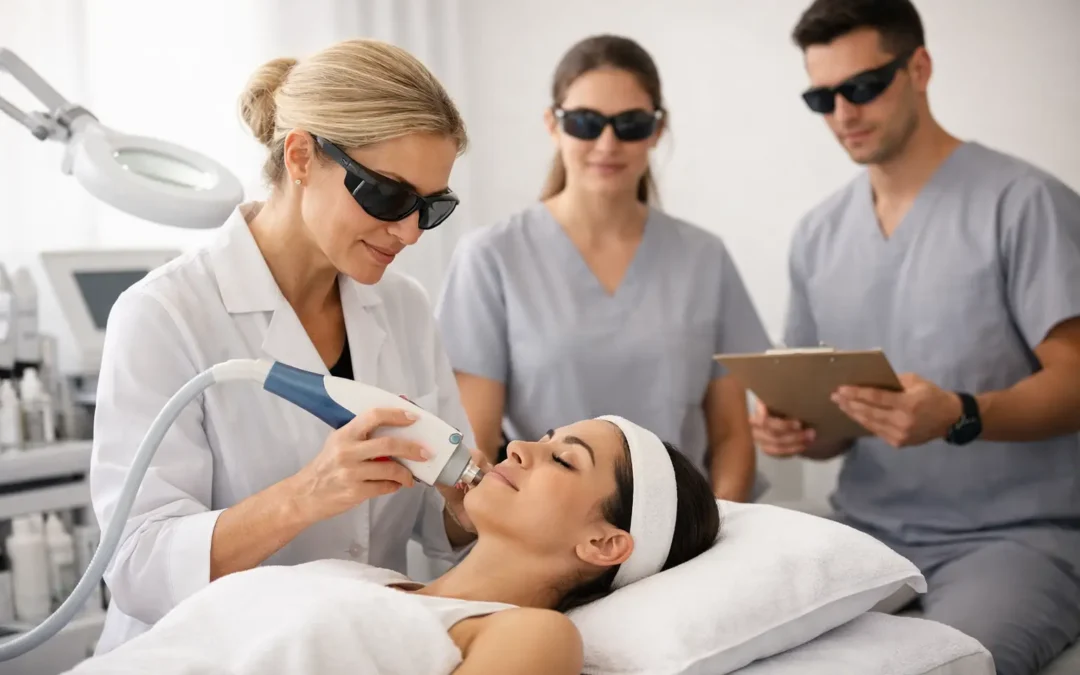
A medical spa treatment room can look impressive: advanced devices, clinical-grade products, and clients expecting visible results. But a career is not built by standing near professional equipment. It is built by knowing how to assess the client in front of you, select the right treatment approach, operate equipment safely, and communicate with confidence. That is why medical esthetics equipment training should be a central part of your education, not an afterthought.
For aspiring medical estheticians, hands-on training turns interest in beauty technology into a practical, employable skill set. It helps you move beyond memorizing device names and begin developing the judgment, professionalism, and client care standards employers expect in a modern spa setting.
Why Medical Esthetics Equipment Training Matters
Medical esthetics is a results-focused field. Clients may come in with concerns related to texture, congestion, uneven tone, aging, unwanted hair, or overall skin health. They are trusting you to provide a service that feels safe, informed, and tailored to their needs.
Equipment can support excellent results, but only when the provider understands the treatment process from start to finish. That includes consultation, skin analysis, contraindication screening, treatment preparation, proper settings and technique, aftercare, cleaning, and documentation. A device does not replace professional judgment. It gives a well-trained professional another way to deliver thoughtful care.
Hands-on education also creates confidence. Reading about a machine is very different from preparing it, holding the applicator correctly, adjusting your movements, and learning how to explain the treatment to a real client. The more guided practice you receive, the more natural these steps become.
The Equipment Skills Employers Look For
A strong program introduces students to the tools commonly used in professional esthetics and medical spa environments while keeping safety and client suitability at the center of every lesson. The exact equipment available will vary by school, workplace, and local regulations, but your education should prepare you to understand the purpose behind each modality.
Students may train with equipment and techniques related to:
- advanced facial treatments and professional exfoliation
- microdermabrasion and skin resurfacing concepts
- radio frequency, ultrasound, or other skin-focused modalities
- laser and light-based treatment theory and safety protocols
The goal is not to treat every device as interchangeable. Each technology has its own benefits, limitations, preparation requirements, and client considerations. For example, a treatment that may be appropriate for one skin concern may not be the right choice for another client, particularly when health history, current skincare use, skin sensitivity, or recent procedures are involved.
This is where quality training makes a difference. You need instructors who explain not only how equipment works, but why a particular treatment is recommended, postponed, modified, or referred to another professional. That kind of decision-making helps protect clients and strengthens your reputation from your first day on the job.
Safety Is a Professional Skill
In medical esthetics, safety is not a separate chapter at the end of a course. It is part of every service. Proper training should cover sanitation, infection prevention, protective equipment, client consultation, informed consent, contraindications, treatment-room setup, device maintenance, and emergency awareness.
It should also make clear that scope of practice and supervision requirements can differ by location and treatment type. Responsible professionals know their role, follow applicable rules, and understand when a client’s needs call for medical guidance. This is not a limitation on your career. It is the foundation of a career clients and employers can trust.
When you learn safety procedures through repeated practice, they become part of your routine. You begin to notice details that inexperienced providers may overlook, such as a relevant medication, a recent sun exposure concern, an unsuitable treatment expectation, or a reason to delay a service. Those moments demonstrate maturity and care.
Practice Builds the Confidence Clients Can Feel
Students often ask whether classroom learning is enough to prepare them for a medical spa career. Theory matters. You need to understand skin structure, product ingredients, treatment principles, and professional standards. Yet theory becomes truly valuable when you can apply it in a supervised setting.
Practical medical esthetics equipment training gives you the opportunity to work through the complete client experience. You learn how to welcome someone professionally, ask the right consultation questions, create a comfortable environment, perform the service with attention to detail, and review aftercare in language the client can understand.
Training with real clientele is especially valuable because no two clients present the same way. One client may be nervous and need clear reassurance. Another may arrive with unrealistic expectations and need an honest, respectful conversation. A third may need a revised plan based on their skin condition that day. These are the communication skills that turn a technically capable student into a trusted service provider.
Small class sizes can make this learning experience stronger. When instructors have time to observe your technique closely, correct your hand position, answer questions, and challenge your reasoning, you receive feedback that is specific to your growth. You are not simply watching from the back of a classroom. You are practicing, improving, and building professional habits.
How to Choose the Right Training Program
Not every medical esthetics program offers the same level of equipment exposure or career preparation. Before you enroll, look beyond a course title and ask how students actually learn.
Start with the learning environment. Is the equipment current and relevant to the types of services offered in professional spas? Are students able to practice under instructor supervision, or is most of the learning demonstration-based? A modern classroom matters, but access to meaningful hands-on experience matters more.
Next, ask about the instructors. Experienced industry professionals can connect technical instruction to the realities of client service, treatment timing, retail recommendations, workplace expectations, and professional conduct. They can also share the practical judgment that is difficult to learn from a manual alone.
Finally, consider how the program supports your next step. The best education helps you prepare for employment, not just complete a course. Look for a curriculum that develops consultation skills, service confidence, sanitation standards, product knowledge, business awareness, and a professional mindset alongside equipment training.
At The Beauty Academy, career-focused education is designed around this connection between learning and real-world readiness. With hands-on practice, modern tools, experienced instructors, and personal attention, students can build skills that translate to the salon, spa, and medical esthetics environments where they want to work.
Your Career Is Bigger Than Any One Device
Technology changes quickly. A device that is popular now may be updated, replaced, or joined by a new treatment category in a few years. That is why the best training does more than teach you a fixed set of machine settings. It teaches you how to learn, assess, communicate, and work safely as the industry evolves.
Employers value professionals who can adapt to new protocols without losing sight of the client experience. They want team members who arrive prepared, follow procedures, ask thoughtful questions, and contribute to a high standard of care. Those qualities can help you pursue opportunities in medical spas, esthetics clinics, salons, wellness settings, and specialized treatment environments.
Your first piece of professional equipment may feel like a major milestone. The more meaningful milestone is becoming the person clients feel comfortable trusting with their skin, their goals, and their time. Choose training that gives you more than exposure to technology. Choose training that helps you build the knowledge, practice, and confidence to use it with purpose.