
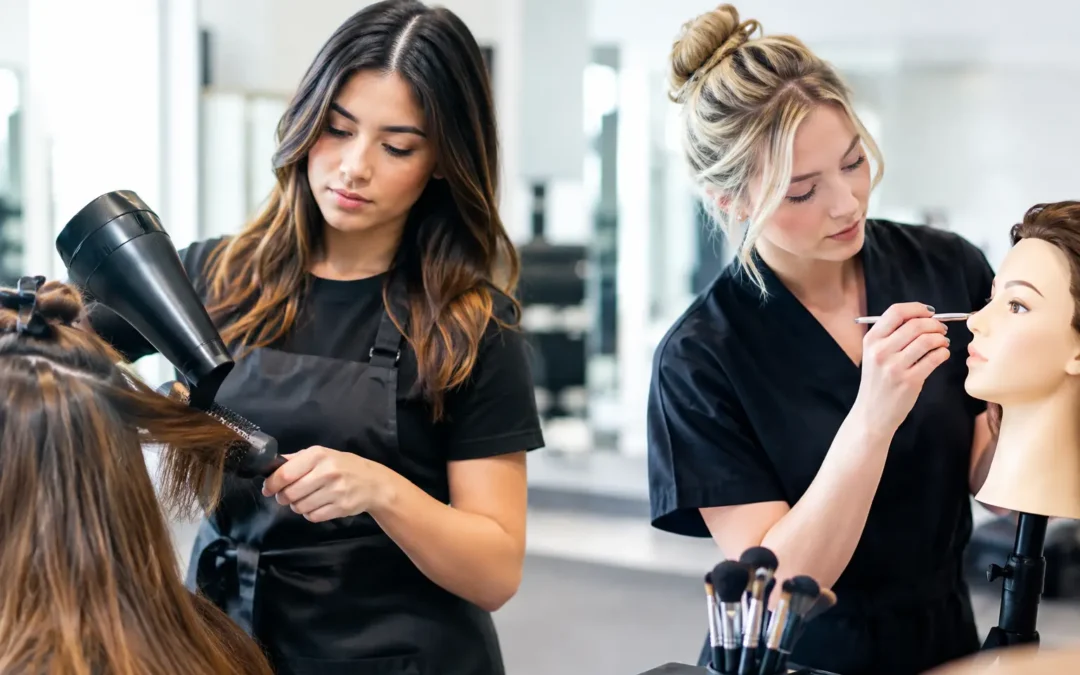
A future stylist does not need more vague advice. You need training that helps you build real skills, work confidently with clients, and step into the beauty industry prepared to succeed. Choosing between a hairstyling school or cosmetology school starts with one practical question: what kind of beauty career do you want to build?
Both paths can lead to creative, people-focused work. The right choice depends on whether you see yourself specializing in hair or developing skills across a broader range of beauty services. Understanding the difference now can help you choose a program that matches your ambitions, your learning style, and the opportunities you want after graduation.
What You Learn in Hairstyling School
Hairstyling school is designed for students who want hair to be the center of their career. Training typically focuses on cutting, coloring, styling, texture services, hair treatments, consultations, sanitation, and professional salon practices.
This is a strong fit if you are excited by the technical and creative details behind a great haircut or color transformation. You may enjoy the idea of creating bridal styles, mastering modern fades, building dimensional blondes, working with curls and coils, or helping clients find a look that feels like them.
A quality hairstyling program should give you more than demonstrations and mannequin work. You need repeated, guided practice and opportunities to work with real clients. Client-facing experience helps you learn how to listen, recommend services, manage timing, solve unexpected challenges, and deliver a polished result under professional standards.
Hair training builds specialized confidence
Specialization can be a major advantage. When your education is centered on hair, you have more time to refine the services that salons and clients expect. You can graduate with a stronger foundation in the technical work that supports a long-term career behind the chair.
Hairstyling also offers room to grow in many directions. Some graduates work in salons, barbershops, resorts, editorial styling, weddings, product education, or independent studio settings. Others build a loyal client base and eventually move into management, education, or business ownership.
What You Learn in Cosmetology School
Cosmetology school generally provides broader beauty education. Depending on the program and local requirements, students may study hair along with areas such as skin care, nail services, makeup, waxing, and other personal care treatments.
This route can appeal to someone who enjoys variety and wants to explore multiple service categories before choosing a specialty. If you are interested in both hair color and makeup artistry, or you can picture yourself offering a mix of salon and spa services, a broader program may feel like a natural starting point.
The trade-off is focus. A wider curriculum means your training time is shared across more subjects. That can be valuable for a student seeking versatility, but it may offer fewer dedicated hours in advanced haircutting, coloring, or styling than a focused hairstyling program.
For some students, that is exactly the point. A broad beauty education can help you discover where your strengths and interests are. For others, especially those already certain that hair is their path, concentrated hairstyling training may be the faster route to developing the depth employers and clients value.
Hairstyling School or Cosmetology School: How to Choose
There is no single answer that works for every future beauty professional. Your best choice should reflect your career vision, not simply the broadest program title.
Start by thinking about the workday you want. Do you picture yourself spending most of your time cutting, coloring, styling, and building long-term relationships with hair clients? A hairstyling-focused program may give you the targeted practice you need. Do you want the flexibility to move among hair, makeup, nails, and skin services? Cosmetology training may better suit your interests.
It is also smart to consider the type of workplace you hope to join. A salon hiring junior stylists may look closely at your technical hair skills, speed, consultation ability, and comfort working with clients. A full-service beauty business may value candidates who can contribute across several service areas. Neither route is automatically better. The goal is to choose training that prepares you for the environment where you want to work.
Look beyond the program name
Program names can be useful, but they do not tell the whole story. Before enrolling, ask what students actually do during training. How much time is spent in practical work? Do students perform services on real clients? Are instructors active, experienced beauty professionals? Is the curriculum current with the techniques, products, and tools used in modern salons and spas?
You should also ask about class size. Beauty education is hands-on by nature. Smaller student-to-teacher ratios can mean more feedback during a haircut, more support during a color correction, and more opportunities to strengthen skills before you enter the workforce.
A career-focused school should help you connect every lesson to the realities of professional service. That includes client communication, retail knowledge, sanitation, appointment timing, teamwork, and the ability to create a welcoming experience from consultation through checkout.
Why Hands-On Training Matters More Than Ever
Watching a technique is not the same as performing it. Beauty professionals build confidence through repetition, feedback, and real problem-solving. Every client brings a different hair type, history, goal, and expectation. Learning to adapt is one of the most valuable parts of your education.
Hands-on training also helps you develop professional presence. You learn how to explain a service, ask the right questions, manage a client’s expectations, and recommend aftercare without sounding scripted. Those skills can shape client trust just as much as your technical ability.
At The Beauty Academy, students learn in a career-focused environment that emphasizes practical training, modern techniques, and personal support. Working with experienced instructors and real clientele can help turn early interest into professional capability.
Think About Your Career Path After Graduation
Your first job does not have to define your entire future. Beauty careers are flexible, and many professionals evolve as their skills and interests grow. A hairstylist may later specialize in extensions, color, textured hair, editorial work, or education. A cosmetology graduate may find a passion for makeup, skin services, or building a full-service personal brand.
Still, your initial training matters because it gives you the base from which you grow. Choose a program that teaches current techniques while reinforcing the professional habits employers expect. A credential is valuable, but the ability to perform services confidently, connect with clients, and continue learning is what helps you create momentum.
Before you make a decision, review the curriculum carefully and ask how the school supports employment readiness. Look for training that feels connected to the industry, not separated from it. Modern equipment, updated instruction, real client practice, and thoughtful instructor feedback can make a meaningful difference in how prepared you feel on your first day at work.
Your Best Choice Is the One That Supports Your Vision
Choose hairstyling school if you want deep, focused preparation for a career centered on hair. Choose cosmetology school if a wider range of beauty services excites you and you want room to explore. In either case, prioritize a learning environment where you will be seen, challenged, and supported.
Your talent deserves more than a classroom experience. It deserves practical education that helps you turn creativity into skill, skill into confidence, and confidence into a career you are proud to build. Visit a campus, meet the instructors, and picture yourself practicing the work you want to do every day. That feeling of direction is often where a dream career begins.