
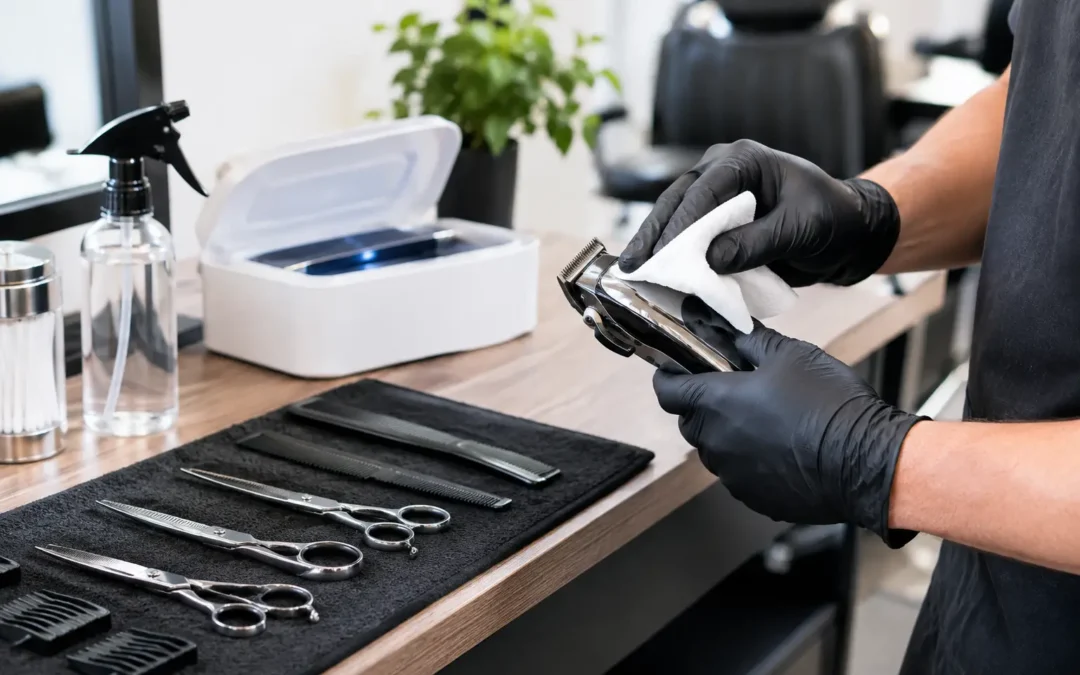
A clean station is one of the first things a client notices when they sit down. Learning how to sanitize barber tools is not just a behind-the-scenes task. It is a visible sign of professionalism, client care, and the standards you bring to every service.
For aspiring barbers, sanitation should become as natural as checking your clipper guard or confirming the consultation. A sharp fade and clean line-up matter, but clients also need to feel safe in your chair. The strongest barbers build that trust through consistent habits, not last-minute cleanup.
Sanitize Barber Tools: Know the Difference
In everyday conversation, people often use clean, sanitize, disinfect, and sterilize interchangeably. In professional barbering, those terms describe different steps.
Cleaning removes visible hair, product residue, dust, and dirt. It is always the first step because disinfectant cannot work properly over debris. Sanitizing lowers the number of germs on a surface to safer levels. Disinfecting uses an approved product to destroy many disease-causing microorganisms on hard, nonporous tools and surfaces. Sterilizing is a higher-level process that destroys all microbial life and is generally associated with medical environments and certain specialized equipment.
Your state board requirements and local public health rules should always guide your process. Product labels and manufacturer instructions matter, too. A disinfectant only performs as intended when it is mixed, applied, and left wet for the stated contact time.
Build a Between-Client Routine You Can Repeat
Great sanitation does not require a complicated ritual. It requires a clear system that you can follow every time, even on a busy Saturday. Set up separate zones for used tools, tools being disinfected, and clean tools ready for service. When everything has a place, there is less chance of reaching for a used comb by mistake.
Start by removing hair and residue
After each client, remove all visible hair from combs, shears, clipper guards, brushes, and work surfaces. Use a dedicated brush for clippers, then wipe away residue according to the tool manufacturer’s recommendations. Hair left in a tool is not harmless. It can prevent disinfectant from reaching the surfaces that need attention.
For combs, guards, and other washable nonporous items, wash with soap or detergent and water before disinfection. Rinse thoroughly so leftover soap does not interfere with the disinfectant solution.
Disinfect hard, nonporous tools correctly
Once tools are clean, disinfect them with a product approved for professional use and appropriate for the item being treated. Some implements can be fully immersed if the manufacturer permits it. Others should be sprayed or wiped with a compatible disinfectant.
Contact time is where many beginners lose consistency. If a label says a surface must remain wet for a certain number of minutes, wiping it dry too soon means the process is incomplete. Read the label, follow the dilution directions if applicable, and replace solutions as required. More product is not always better, and incorrect mixing can make a disinfectant less effective or unsafe to use.
After disinfection, allow tools to air-dry fully when the product directions call for it. Store clean, dry implements in a covered container or closed drawer until the next client. A clean tool placed back on an exposed station is no longer protected from contamination.
Handle clippers with extra care
Clippers are essential barbering tools, but they are electrical equipment. Never assume they can be submerged. First, turn them off and disconnect them from power when appropriate. Brush out loose hair, clean the blades using a method approved by the clipper manufacturer, and use a compatible blade disinfectant or spray.
Oil blades only after they are clean and disinfected, following the product instructions. Proper maintenance helps prevent rust, keeps blades moving smoothly, and supports a more comfortable service. A clipper that pulls hair or carries buildup is not ready for the next guest.
What to Do With Items That Cannot Be Disinfected
Not every item at a barber station can be treated the same way. Porous or single-use items, such as neck strips, cotton, wooden applicators, tissues, and some sanding or buffing materials, should be discarded after one client. They are not meant to be cleaned and reused.
Capes can be reused only after proper laundering. Use a fresh neck strip for every client so the cape does not directly contact the skin. Towels should be placed in a covered container after use and washed before returning to service. Keep clean linens separate from used linens at all times.
If an item is cracked, worn, rusty, or difficult to clean, replace it. Saving a few dollars on a damaged comb or blade is never worth compromising a client’s comfort or your professional reputation.
Keep the Whole Barber Station Client-Ready
Tools are only one part of sanitation. Your chair, headrest, armrests, countertop, clipper charging area, spray bottles, and product dispensers also need regular attention. Anything touched during a service can become part of the sanitation routine.
Disinfect high-touch surfaces between clients with an appropriate product, allowing the required contact time. Keep product containers clean on the outside, especially pomade jars, styling bottles, and spray nozzles. Avoid double-dipping fingers into product containers. Use a clean spatula or dispenser whenever possible.
Your own hand hygiene matters just as much. Wash hands before and after each client and any time you touch something contaminated, such as used tools, trash, or your phone. Gloves can be useful for specific tasks, but gloves do not replace handwashing. Change them between clients and never use the same pair to clean tools and perform a service.
Have a Clear Plan for Nicks and Cuts
Even experienced barbers can encounter a minor nick. What protects clients and professionals is a calm, correct response. Stop the service, put on gloves, and follow your local board’s blood exposure procedure. Use single-use materials, place contaminated waste in the appropriate covered container, clean and disinfect any affected nonporous surfaces, and wash your hands afterward.
Do not continue using a tool that may have been contaminated until it has been cleaned and disinfected properly. If you are training for a barbering career, practice this procedure until you can perform it confidently without creating alarm for the client.
Why Sanitation Skills Matter for Your Career
Sanitation is a technical skill, a client-service skill, and a business skill. Clients may not know the exact name of every disinfectant, but they notice when their barber unwraps a clean cape, reaches for organized tools, and resets the station with care. Those details encourage repeat visits and referrals.
Employers notice them, too. Barbershops need professionals who can deliver quality work while maintaining a safe, efficient environment. Strong habits help you work faster without cutting corners, protect your tools from unnecessary damage, and show that you are prepared for a real service floor.
At The Beauty Academy, hands-on education helps future professionals connect classroom standards with the pace and expectations of client service. Learning under experienced instruction gives students the opportunity to build confidence in both technical barbering and the professional routines that support long-term success.
Make Sanitation Part of Your Signature Service
The best time to think about sanitation is before the first client arrives. Stock your disinfectant, prepare clean towels and neck strips, check your tools, and make sure your station is organized. At the end of the day, complete a deeper clean so you begin tomorrow ready to focus on your craft.
Your clients trust you with their appearance and their personal space. Respect that trust with clean tools, disciplined routines, and a station that reflects the professional barber you are becoming.