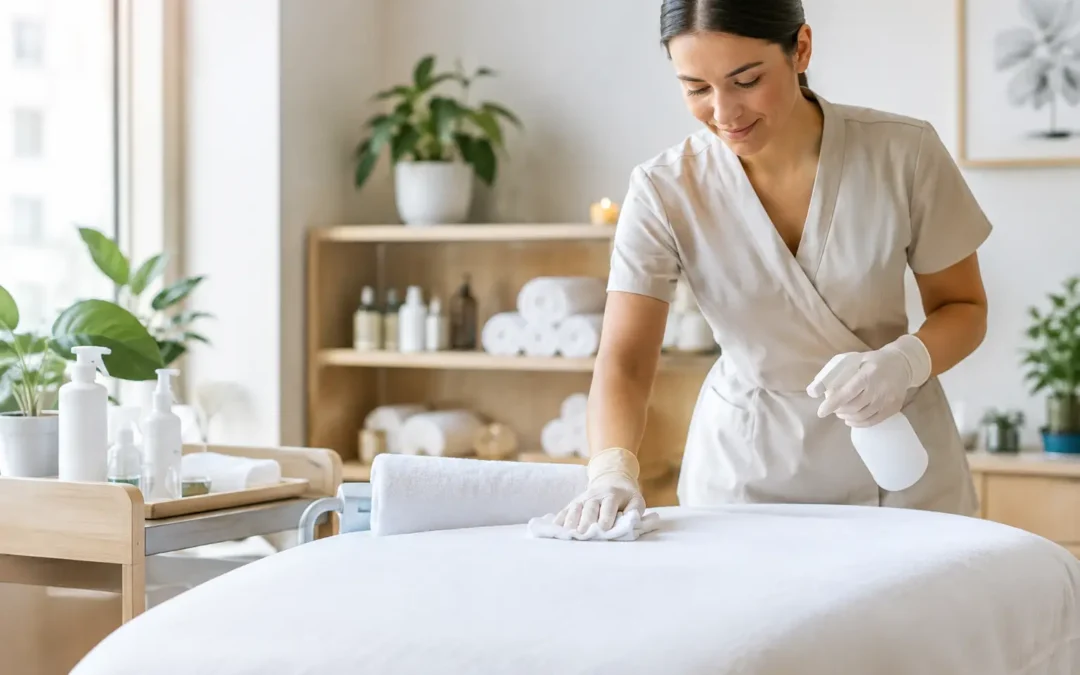
A client may not be able to judge the quality of a facial peel or massage technique right away, but they notice a clean treatment bed, fresh linens, organized tools, and confident hand hygiene. Those details shape trust before a service begins. For aspiring estheticians and medical spa professionals, spa hygiene standards are not background tasks. They are a core part of delivering safe, professional care and building a career clients feel good about returning to.
Great spa service combines technical ability with thoughtful client care. Hygiene connects both. It protects the client, protects the professional, supports the reputation of the business, and helps create the calm, polished experience people expect when they book a treatment.
Why Spa Hygiene Standards Matter in Every Service
Spa professionals work closely with skin, hair, hands, feet, reusable tools, linens, and cosmetic products. Without consistent infection-control practices, bacteria, fungi, viruses, and other contaminants can move from a surface, tool, product, or person to someone else. Even when no visible issue is present, cross-contamination is possible.
That is why hygiene must be treated as a routine, not a reaction. A professional does not wait until a client raises a concern to disinfect a workstation or replace a worn implement. They follow the same careful process for every client, every time.
Strong hygiene practices also support career confidence. When you understand why a tool is cleaned before it is disinfected, when gloves are appropriate, or when a service should be postponed, you can make informed decisions under pressure. Clients can feel that confidence. It shows in the way you set up your station, explain aftercare, and respond to questions about safety.
For employers, hygiene knowledge is equally valuable. Salons, spas, and medical spas need team members who can protect the client experience without constant reminders. This is one reason hands-on education matters. Procedures become second nature when students practice them in real service environments under the guidance of experienced instructors.
The Difference Between Cleaning, Disinfecting, and Sterilizing
These terms are often used interchangeably, but they describe different steps. Knowing the distinction helps future professionals choose the right process for the service and the item involved.
Cleaning removes visible dirt, residue, oils, and product buildup. It is the first step for reusable implements and surfaces because disinfectant cannot work as intended through debris. A brush, bowl, or metal tool may look clean, but it still needs to be properly washed before moving to the next stage.
Disinfecting uses an approved chemical product to reduce or destroy many harmful microorganisms on nonporous surfaces and reusable tools. The product must be mixed, stored, and used according to its label directions, including the required contact time. Wiping a surface and immediately drying it may not provide the protection the product is designed to deliver.
Sterilizing is a higher-level process intended to destroy all forms of microbial life. It is generally associated with specific equipment and procedures, particularly where instruments may come into contact with blood or compromised skin. Not every spa service requires sterilization, but professionals must understand when local regulations, service protocols, or the nature of an instrument call for it.
The right standard depends on the treatment, the tools used, and the rules that apply in your jurisdiction. A thoughtful professional never assumes that one method fits every situation.
Daily Habits That Prevent Cross-Contamination
The safest spa environments are built through small, repeatable actions. Hand hygiene should happen before and after each client interaction, after removing gloves, after handling waste, and whenever hands may have become contaminated. Gloves are useful for certain services, but they do not replace handwashing. They must be changed between tasks and clients, then discarded properly.
Treatment rooms should be reset completely between appointments. Used linens go into a designated closed container, while fresh linens are stored separately and protected from contamination. Treatment beds, counters, lamps, handles, trays, and any high-touch surfaces should be cleaned and disinfected according to the products and procedures approved for the facility.
Product handling deserves the same attention. Double-dipping a spatula into a jar after it has touched a client can contaminate the entire product. Instead, professionals should dispense what they need using clean tools, then use a new applicator if more product is required. Single-use items, including certain applicators, gloves, gauze, and waxing supplies, should never be reused.
A strong daily hygiene routine includes:
- Checking treatment rooms before opening to ensure surfaces, linens, and supplies are ready.
- Separating clean, used, and disinfected tools so there is no confusion during a busy shift.
- Following manufacturer directions for disinfectant concentration, contact time, storage, and replacement.
- Laundering linens appropriately and keeping clean laundry away from used materials.
- Inspecting tools for damage, rust, cracks, or buildup that can make proper sanitation difficult.
These habits may seem simple, but consistency is what separates a merely tidy workspace from a truly professional one.
When Hygiene Means Saying No to a Service
Client care sometimes means postponing or modifying a treatment. A visible skin infection, open wound, unexplained rash, active cold sore, or other condition may make a service unsafe for the client or others. Professionals should know their scope of practice and avoid diagnosing. Their role is to recognize when a concern requires caution, explain the situation respectfully, and refer the client to an appropriate health professional when needed.
This can feel uncomfortable for a new service provider who wants to be accommodating. But a respectful pause protects everyone involved. Clients are more likely to trust a professional who puts safety before a sale.
The same principle applies to injuries during service. If an accidental cut or exposure occurs, stop the service and follow the facility’s exposure-control procedure immediately. Proper training helps professionals respond calmly instead of guessing in a stressful moment.
Building Hygiene Skills Through Hands-On Training
Reading a checklist is useful. Performing the process repeatedly is where confidence develops. Students preparing for esthetics or medical spa careers benefit from practicing how to set up a treatment area, select the right implements, sanitize between clients, manage linens, and keep service flow efficient without cutting corners.
At The Beauty Academy, hands-on learning helps students connect professional standards with real client service. Instructors can correct small habits early, such as touching clean supplies with used gloves or placing disinfected tools on an unclean surface. Those details matter because they become part of your professional routine long after graduation.
Modern spa work also requires adaptability. A facial room, waxing station, manicure area, and medical esthetics environment may have different tools, procedures, and risks. The underlying mindset stays the same: assess the service, prepare clean materials, prevent contamination, and complete every step with client safety in mind.
Professionalism Clients Can See
Hygiene is not only about what happens behind the scenes. Clients notice whether tools are opened from a clean storage area, whether a bed is prepared in front of them, and whether the service provider explains what they are doing. Clear communication can turn a standard procedure into a reassuring moment.
For example, a brief statement such as, “I’m sanitizing the area and setting up fresh supplies for your service,” demonstrates care without making the appointment feel clinical. If a client asks about product use, tool sanitation, or a skin concern, answer honestly and within your professional scope.
There is a balance to maintain. A spa should feel welcoming, comfortable, and relaxing, not overly rigid or impersonal. The best professionals make hygiene look effortless because they have practiced the systems behind it. Their clients experience a clean, calm space and leave knowing they were treated with care.
As you build your dream career in esthetics or medical spa services, make hygiene one of the skills you are proudest to demonstrate. Creative talent can attract attention, but consistent professional care is what earns lasting client trust.