A polished facial is not simply a relaxing service. It is a professional assessment, a treatment plan, and a client relationship built in one appointment. That is why the best skincare treatments to learn are not always the ones with the biggest social media buzz. They are the services that help you develop sound judgment, deliver visible results safely, and build a career clients trust.
For aspiring estheticians and medical spa professionals, the strongest education starts with the treatments clients request regularly, then builds toward advanced services as your confidence, knowledge, and scope of practice grow. The goal is not to learn every trend at once. It is to become prepared to recommend, perform, and personalize services with skill.
Best Skincare Treatments to Learn First
Customized facials and skin analysis
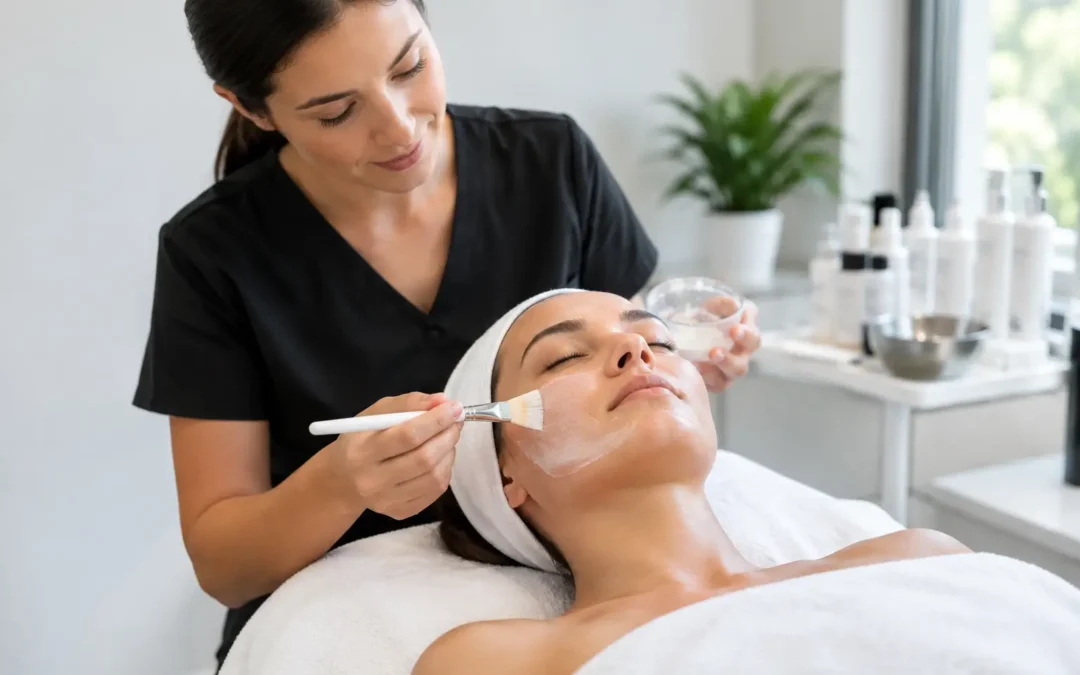
A customized facial is the foundation of an esthetics career. It teaches the core skills behind nearly every skin service: client consultation, skin analysis, cleansing, exfoliation, extractions, massage, masking, product selection, and post-treatment guidance.
More importantly, facials teach you how to think like a skincare professional. Two clients may both say they have dry skin, but one may be dehydrated from over-exfoliation while the other may have a compromised barrier, sensitivity, or a condition that needs medical attention. Learning to observe the skin, ask the right questions, and adapt your service is what turns a standard facial into a valuable client experience.
This treatment also gives new professionals plenty of opportunities to practice client communication. You learn how to explain what you see without making unrealistic promises, recommend an appropriate home-care routine, and set expectations for results. Those skills support client retention in every spa or salon setting.
Professional exfoliation and chemical peels
Exfoliation is a major part of results-focused skincare, which makes professional peels one of the most valuable treatments to add to your education. Enzyme treatments, superficial chemical peels, and other professional exfoliation methods can help address dullness, uneven texture, congestion, and certain signs of aging when selected and performed correctly.
The word “peel” can make the service sound simple, but responsible treatment requires a strong understanding of skin physiology. You need to know how different acids work, what concentrations and pH levels mean, which clients are suitable candidates, and when to postpone a service. A client using certain medications, recovering from a recent procedure, or experiencing active irritation may need a gentler option or a referral.
Learning peel protocols also builds discipline. Timing, layering, skin response, neutralization where required, and aftercare all matter. This is a treatment where careful technique protects both your client and your professional reputation.
Acne-focused treatments and extractions
Acne is one of the most common reasons clients seek professional skincare support. While estheticians do not diagnose medical conditions or replace dermatological care, they can provide thoughtful services that support clearer-looking skin and help clients feel more confident.
Acne-focused facials may include thorough cleansing, appropriate exfoliation, careful extractions, calming masks, high-frequency treatments when within training and local regulations, and product education. The skill is not just removing visible congestion. It is knowing when extractions are appropriate, when inflammation makes them unsuitable, and when to avoid creating unnecessary trauma to the skin.
This specialty can be especially rewarding because clients often return for a treatment series. It also teaches the value of tracking progress over time. A great skincare professional takes before-and-after goals seriously, adjusts treatment plans based on skin response, and encourages realistic consistency rather than promising an overnight solution.
Dermaplaning
Dermaplaning has earned a place in many treatment rooms because it offers immediate smoothness and enhanced surface radiance. Using a sterile blade and controlled technique, the professional removes surface dead skin cells and fine vellus hair. It can be a standalone service or part of a facial protocol, depending on the client’s needs and your training.
It is also a treatment that demands precision. Proper blade handling, skin tension, sanitation, contraindications, and aftercare cannot be treated as minor details. Clients with active acne, open lesions, irritation, or certain skin conditions may not be ideal candidates.
For students interested in medical esthetics or advanced facial services, dermaplaning is a practical skill because it combines technical control with consultation expertise. When done well, it is a refined service that clients often appreciate before an event or as part of an ongoing skin-maintenance plan.
Microdermabrasion and advanced resurfacing services
Microdermabrasion remains a useful treatment to learn because many clients want a noninvasive option for improving the appearance of rough texture, dullness, and mild congestion. The treatment uses mechanical exfoliation to refresh the skin’s surface, and it can be customized based on sensitivity, skin type, and treatment goals.
As with chemical exfoliation, more intensity is not always better. A client with reactive or compromised skin may benefit from a different approach. The best practitioners understand when a mild facial is the right choice and when a more active treatment is appropriate.
Advanced resurfacing can be an excellent career direction, particularly for professionals who want to work in a medical spa environment. However, technologies and treatment permissions vary by jurisdiction, employer policies, and professional scope. Quality training should teach you the science, safety protocols, client screening, device operation, and professional boundaries behind each service, not just the steps of a procedure.
Treatments That Build Medical Spa Opportunities
Medical spa services can open exciting career paths, but they require a careful, education-first mindset. Depending on local regulations and the supervising medical professional, opportunities may include advanced peels, microneedling, laser-based services, radiofrequency treatments, and other technology-assisted procedures.
Microneedling, for example, is frequently requested for concerns such as the appearance of acne scarring, texture, and fine lines. It is not a service to learn from a quick online demonstration. Proper training includes skin anatomy, depth selection, sterile technique, contraindications, informed consent, treatment planning, and detailed aftercare. Requirements differ by location, so professionals must always work within the laws and standards that apply to their practice.
Laser and light-based services can also be valuable specialties, but they come with a higher level of responsibility. Skin tone, treatment settings, health history, sun exposure, and device-specific safety protocols all influence whether a service is suitable. A strong training environment emphasizes consultation and safety just as much as technology.
Injectables are another area clients may ask about, but they are not an esthetic service in many settings. Knowing how to speak accurately about your role, refer clients appropriately, and collaborate professionally with medical teams is part of being employment-ready.
What Makes a Treatment Worth Learning?
The right treatment depends on the career you want to build. If you see yourself in a day spa, customized facials, massage, exfoliation, extractions, and relaxing yet results-oriented rituals should be your priority. If you are drawn to medical esthetics, build that foundation first, then pursue advanced modalities through education that meets applicable requirements.
Choose training that gives you supervised, hands-on practice rather than technique demonstrations alone. You need experience working with different skin types, concerns, and client personalities. You also need constructive feedback from instructors who can correct your hand placement, consultation language, sanitation habits, and treatment sequencing before you enter the workforce.
At The Beauty Academy, students benefit from career-focused education designed around current techniques, modern equipment, and practical experience. Small class environments can make a meaningful difference when you are developing technical confidence, because individualized guidance helps turn knowledge into professional ability.
The Skills Behind Every Great Skincare Service
A treatment certificate is valuable, but clients remember how you make them feel. The most successful estheticians pair technical training with excellent sanitation, empathy, time management, retail knowledge, and clear communication.
Learn how to conduct a consultation without rushing it. Practice explaining why you recommend one service over another. Build the confidence to say no when a client is not a suitable candidate, and to recommend a physician when a concern falls outside your scope. These choices build trust, and trust builds a long-term career.
As you choose your path, focus on treatments that give you both versatility and a strong professional foundation. Start with the services that teach you to understand skin, then continue building specialized skills that match your goals. Every well-performed treatment is a chance to help someone feel more confident while moving one step closer to the career you want.